The brain and nerves form the nervous system, your body's intricate and all-encompassing command center. This complex network governs everything from your breathing and heartbeat to your thoughts, emotions, and movements. Understanding how this system works is the first step toward protecting and optimizing its health for a lifetime of well-being.
Understanding the Nervous System: The Body's Command Center
The nervous system is the master controller of your body, a vast communication network that sends and receives electrical and chemical signals. It includes the brain, spinal cord, and a complex web of nerves that extend to every organ, muscle, and gland. According to Johns Hopkins Medicine, this system controls thought, memory, emotion, motor skills, and every process that regulates our body.
The Two Main Divisions of the Nervous System
The nervous system is broadly divided into two principal parts, each with a distinct but interconnected role.
The Central Nervous System (CNS): The Core Processor
The Central Nervous System (CNS) consists of the brain and the spinal cord. Think of it as the central processing unit for your entire body. It receives sensory information from the peripheral nerves, interprets this data, and issues commands. As noted by the National Institutes of Health (NIH), the brain is responsible for processing and integrating information, while the spinal cord acts as the main conduit for messages between the brain and the rest of the body.
The Peripheral Nervous System (PNS): The Information Highway
The Peripheral Nervous System (PNS) is the vast network of nerves that branch out from the CNS, connecting it to your limbs and organs. These nerves act as the information highway, relaying signals from the body to the brain and carrying instructions from the brain back to the body. The PNS is further divided into the somatic nervous system (controlling voluntary movements) and the autonomic nervous system (regulating involuntary functions like digestion and heart rate).
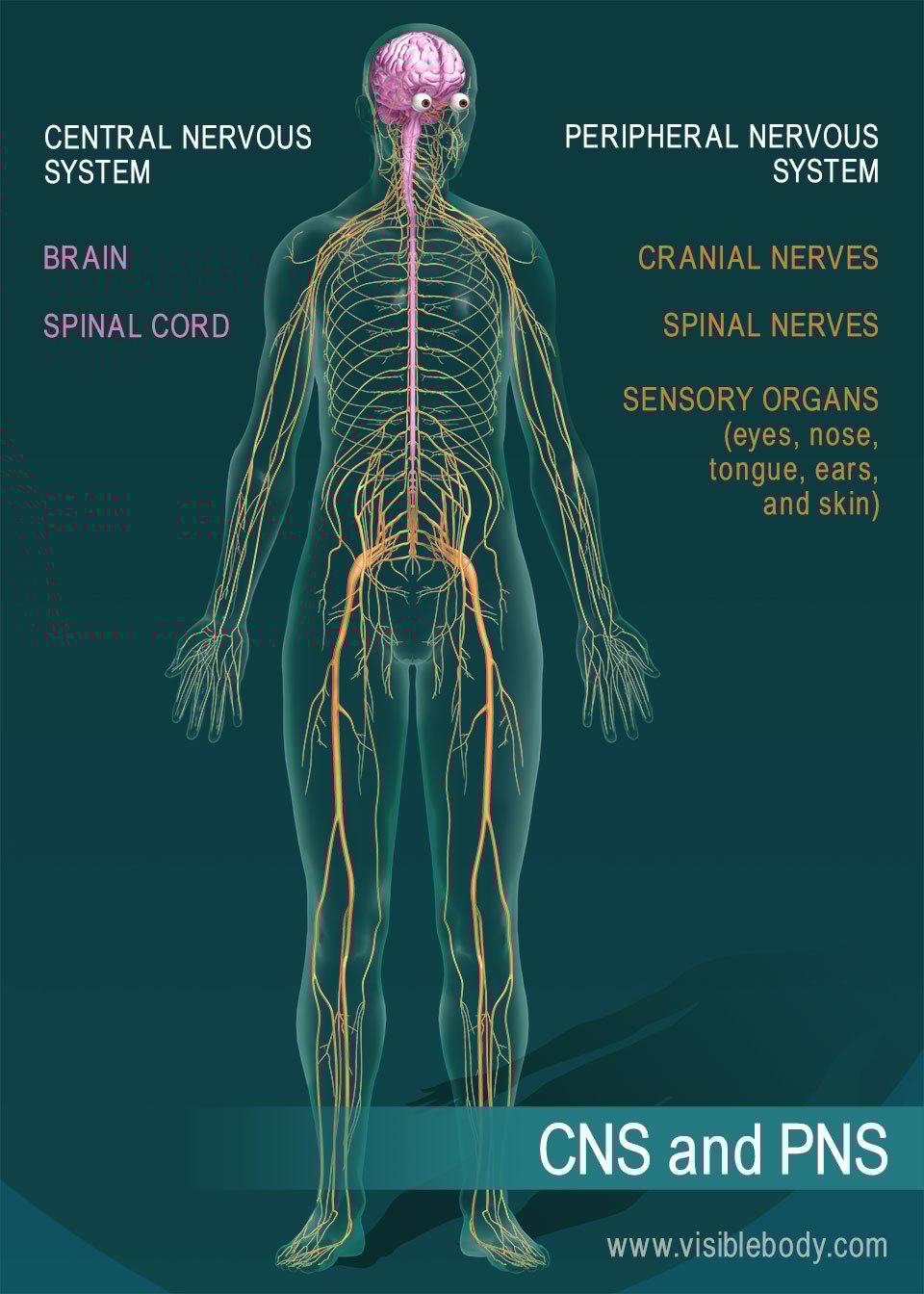 Image Source: Visible Body. The nervous system is divided into the Central Nervous System (CNS) and the Peripheral Nervous System (PNS).
A Deep Dive into the Brain: Anatomy and Function
The brain is the most complex organ in the human body, weighing about three pounds and composed of approximately 60% fat. It is not a muscle but a sophisticated structure of neurons, glial cells, blood vessels, and supportive tissues.
Key Components of the Brain
The brain can be divided into three main parts: the cerebrum, cerebellum, and brainstem.
- Cerebrum: The largest part of the brain, the cerebrum is divided into two hemispheres. Its wrinkled outer layer, the cerebral cortex, is responsible for higher-level functions. The cerebrum is segmented into four lobes, each with specialized roles:
- Frontal Lobe: Governs personality, decision-making, movement, and speech (Broca's area).
- Parietal Lobe: Processes touch, pain, and spatial relationships. It also helps in understanding language (Wernicke's area).
- Temporal Lobe: Involved in memory, hearing, and recognizing language.
- Occipital Lobe: Primarily dedicated to processing vision.
- Cerebellum: Located at the back of the head, the cerebellum, or "little brain," is crucial for coordinating voluntary movements, maintaining posture, balance, and equilibrium.
- Brainstem: This vital structure connects the cerebrum and cerebellum to the spinal cord. It manages essential survival functions, including heart rhythm, breathing, and blood flow. It consists of the midbrain, pons, and medulla.
What is the Brain Made Of?
The brain's tissue is separated into two main types:
- Gray Matter: This darker, outer portion of the cerebrum is primarily composed of neuron cell bodies. It is where information processing and interpretation occur.
- White Matter: The lighter, inner section is made of long nerve fibers (axons) wrapped in a protective coating called myelin. White matter is responsible for transmitting information between different areas of gray matter and to the rest of the body.
Nerves: The Body's Intricate Wiring
Nerves are bundles of specialized cells called neurons that act like cables, carrying electrical impulses throughout your body. As the Cleveland Clinic explains, these signals help you feel sensations, move your muscles, and maintain automatic functions.
Types of Nerves
Nerves are generally categorized by their function:
- Sensory Nerves: Transmit signals from your body to your brain, allowing you to touch, taste, smell, and see.
- Motor Nerves: Carry signals from your brain to your muscles and glands, enabling movement and function.
- Autonomic Nerves: Control involuntary or semi-voluntary functions like heart rate, blood pressure, and digestion.
Major Nerve Groups
Nerves branch out from the CNS in two main groups:
- Cranial Nerves: There are 12 pairs of cranial nerves that originate directly from the brain, mostly in the brainstem. They control functions in the head and neck, such as eye movement (oculomotor nerve), facial expression (facial nerve), and sensation from the face (trigeminal nerve).
- Spinal Nerves: You have 31 pairs of spinal nerves that emerge from the spinal cord. They transmit sensory and motor information between the spinal cord and the rest of the body. A well-known example is the sciatic nerve, the longest nerve in the body, which runs from the lower back down each leg.
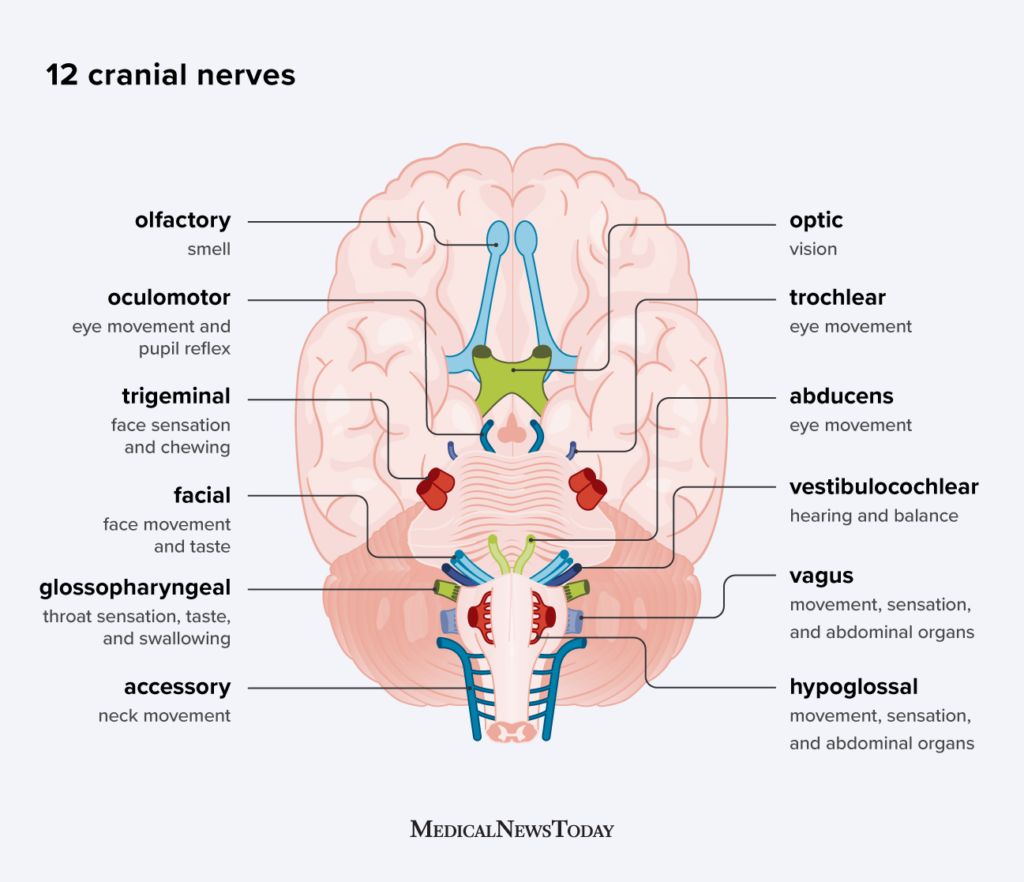 Image Source: Medical News Today. A diagram illustrating the functions of the 12 cranial nerves.
Common Conditions and Disorders of the Brain and Nerves
When the nervous system is damaged or dysfunctional, it can lead to a wide range of debilitating conditions. Recognizing the signs is critical for early intervention.
Recognizing the Signs: When is the Nervous System "Out of Whack"?
Symptoms of a nervous system issue can be diverse and may include:
- Sensory Symptoms: Numbness, tingling ("pins and needles"), burning pain, or loss of sensation.
- Motor Symptoms: Muscle weakness, tremors, involuntary twitching, poor coordination, or difficulty walking.
- Autonomic Symptoms: Dizziness upon standing, excessive or reduced sweating, digestive issues (constipation or diarrhea), and bladder control problems.
- Cognitive Symptoms: Confusion, memory loss, difficulty speaking or understanding language, and sudden changes in mood or behavior.
Diseases That Attack the Nerves
Several types of diseases can damage the brain and nerves:
- Autoimmune Disorders: Conditions like Multiple Sclerosis (MS), where the immune system attacks the myelin sheath of nerves in the CNS, and Guillain-Barré Syndrome, which affects peripheral nerves.
- Infections: Viruses and bacteria can cause conditions like meningitis (inflammation of the membranes surrounding the brain) or encephalitis (inflammation of the brain itself).
- Metabolic Conditions: Uncontrolled diabetes is a leading cause of peripheral neuropathy, a type of nerve damage that often affects the hands and feet.
- Neurodegenerative Diseases: Conditions like Alzheimer's and Parkinson's disease involve the progressive loss of nerve cells.
Autonomic Nervous System Dysregulation and Chronic Health
Recent research highlights a strong connection between a dysregulated Autonomic Nervous System (ANS) and many chronic health problems. When the "fight-or-flight" (sympathetic) branch is persistently overactive and the "rest-and-digest" (parasympathetic) branch is underactive, the body gets stuck in a state of high alert. This imbalance is a hidden driver behind conditions like Postural Tachycardia Syndrome (POTS), Irritable Bowel Syndrome (IBS), chronic fatigue, and even mental health disorders like anxiety and PTSD.
The Future of Nerve Health: Repair and Regeneration
For centuries, it was believed that damage to nerve cells was permanent. However, modern science has overturned this dogma, revealing the nervous system's remarkable capacity for repair and regeneration.
Can Nerves Repair Themselves?
As detailed in Scientific American, scientists have learned that peripheral nerves possess a significant ability to regrow after injury. The process is complex and often incomplete, but it is possible. More revolutionary was the discovery in the late 20th century of neurogenesis—the creation of new neurons—in specific areas of the adult human brain, particularly the hippocampus, which is linked to learning and memory.
Practical Strategies for Nerve Repair
The field of neuroregeneration is rapidly advancing, offering new hope for those with nerve injuries.
- Surgical Interventions: For severed nerves, microsurgery to directly repair the nerve or use an autologous nerve graft (a nerve taken from another part of the patient's body) remains the gold standard.
- Innovations in Repair: To overcome the limitations of grafts, surgeons now use artificial nerve conduits—biodegradable tubes that guide regenerating nerve fibers across a gap. Nerve allografts, taken from deceased donors, are another option.
- Cutting-Edge Therapies: The future lies in combining surgery with regenerative medicine. This includes using stem cells to support axonal growth, delivering growth factors to the injury site, and using adjunctive therapies like electrical stimulation to accelerate regeneration.
Proactive Maintenance: How to Keep Your Brain and Nerves Healthy
You can take proactive steps to support and optimize the health of your nervous system throughout your life. A holistic approach focusing on diet, exercise, rest, and stress management is key.
Nutrition for Your Nerves
A brain-healthy diet is essential. Key nutrients include:
- Omega-3 Fatty Acids: Found in fatty fish, walnuts, and flaxseeds, they are crucial for brain cell membranes.
- B Vitamins: Especially B12, B6, and folate, are vital for nerve function and myelin production.
- Antioxidants: Found in berries, dark leafy greens, and other colorful fruits and vegetables, they protect nerve cells from oxidative stress.
The Role of Physical Activity
Regular exercise increases blood flow to the brain, delivering oxygen and nutrients. It also stimulates the release of endorphins, which can help calm the nervous system and improve mood.
The Importance of Sleep and Rest
During sleep, the brain clears out toxins and consolidates memories. Aim for 7-9 hours of quality sleep per night to allow your nervous system to repair and rejuvenate.
Managing Stress
Chronic stress can be toxic to the nervous system. Practices like mindfulness, meditation, and deep breathing exercises activate the body's relaxation response, counteracting the harmful effects of stress.
Brain Stimulation
Keep your brain active and engaged. Activities like reading, solving puzzles, learning a new language or musical instrument, and maintaining social connections help build cognitive reserve and maintain neural connections.
Frequently Asked Questions (FAQ)
What are the common symptoms of a nerve problem?
Symptoms of a nerve problem depend on the type of nerve affected. Sensory nerve issues can cause tingling, numbness, burning pain, or increased sensitivity. Motor nerve problems may lead to muscle weakness, cramps, twitching, and loss of coordination. Damage to autonomic nerves can result in digestive problems, changes in blood pressure causing dizziness, bladder dysfunction, and abnormal sweating.
How can you tell if your nervous system is out of whack?
Signs of a dysregulated nervous system can be widespread. They include sensory changes like numbness or vision problems; motor issues like weakness, tremors, or poor balance; autonomic dysfunctions affecting breathing, heart rate, or digestion; and cognitive or mood changes such as confusion, memory issues, or sudden personality shifts. Sudden severe headaches or seizures require immediate medical attention.
What helps repair the nervous system?
The nervous system has a capacity for repair, especially in the peripheral nerves. Specialized glial cells called Astrocytes play a key role in mitigating damage and repair. Modern medical strategies include direct surgical repair, nerve grafts, and advanced nerve conduits. Emerging treatments like stem cell therapy, targeted growth factors, and electrical stimulation are also showing promise in enhancing neuroregeneration.
What kinds of diseases attack the nerves?
Various diseases can attack the nerves. Autoimmune disorders like Multiple Sclerosis (MS) and Guillain-Barré Syndrome occur when the body's immune system mistakenly targets nerve cells. Infections such as meningitis and Lyme disease can also cause nerve damage. Additionally, metabolic conditions like diabetes are a common cause of peripheral neuropathy (nerve damage), and certain toxins or chemotherapy drugs can also harm nerves.
References