What Is the Average Height for a 13 Year Old? A Comprehensive Medical Guide to Adolescent Growth

Understanding adolescent development often begins with a simple question that has puzzled parents for decades: what is the average height for a 13 year old? The answer is not a single number but a carefully mapped statistical range that reflects the complex interplay of genetics, hormonal maturation, and environmental factors. At thirteen, adolescents stand at a fascinating biological crossroads where childhood growth transitions into rapid pubertal development. Recognizing the clinical benchmarks, understanding the physiological mechanisms driving longitudinal bone elongation, and knowing how to support healthy development are essential for caregivers and teens alike. This comprehensive guide breaks down pediatric growth data, explains the medical science behind adolescent height, and provides evidence-based strategies to help teenagers reach their full genetic potential while avoiding common misconceptions about growth and stature.
Understanding the Numbers: Average Height Statistics
When evaluating pediatric growth, clinicians rely on standardized reference populations rather than isolated averages. The question of what is the average height for a 13 year old is best answered by examining the 50th percentile data from the Centers for Disease Control and Prevention (CDC) 2000 Growth Charts and the World Health Organization (WHO) 2007 Growth Reference for ages 5 to 19. These references are derived from nationally representative, cross-sectional surveys that track thousands of healthy children over time. At exactly 13 years of age, the 50th percentile height for boys is approximately 5 feet 1.5 inches (156.2 cm), while girls measure approximately 5 feet 1.75 inches (156.9 cm). This near-identical midpoint reflects a temporary biological convergence before sexual dimorphism fully separates growth trajectories in the mid-to-late teens.
Free calculatorSleep CalculatorCalculate sleep cyclesOpen the calculatorCDC and WHO Growth Reference Data
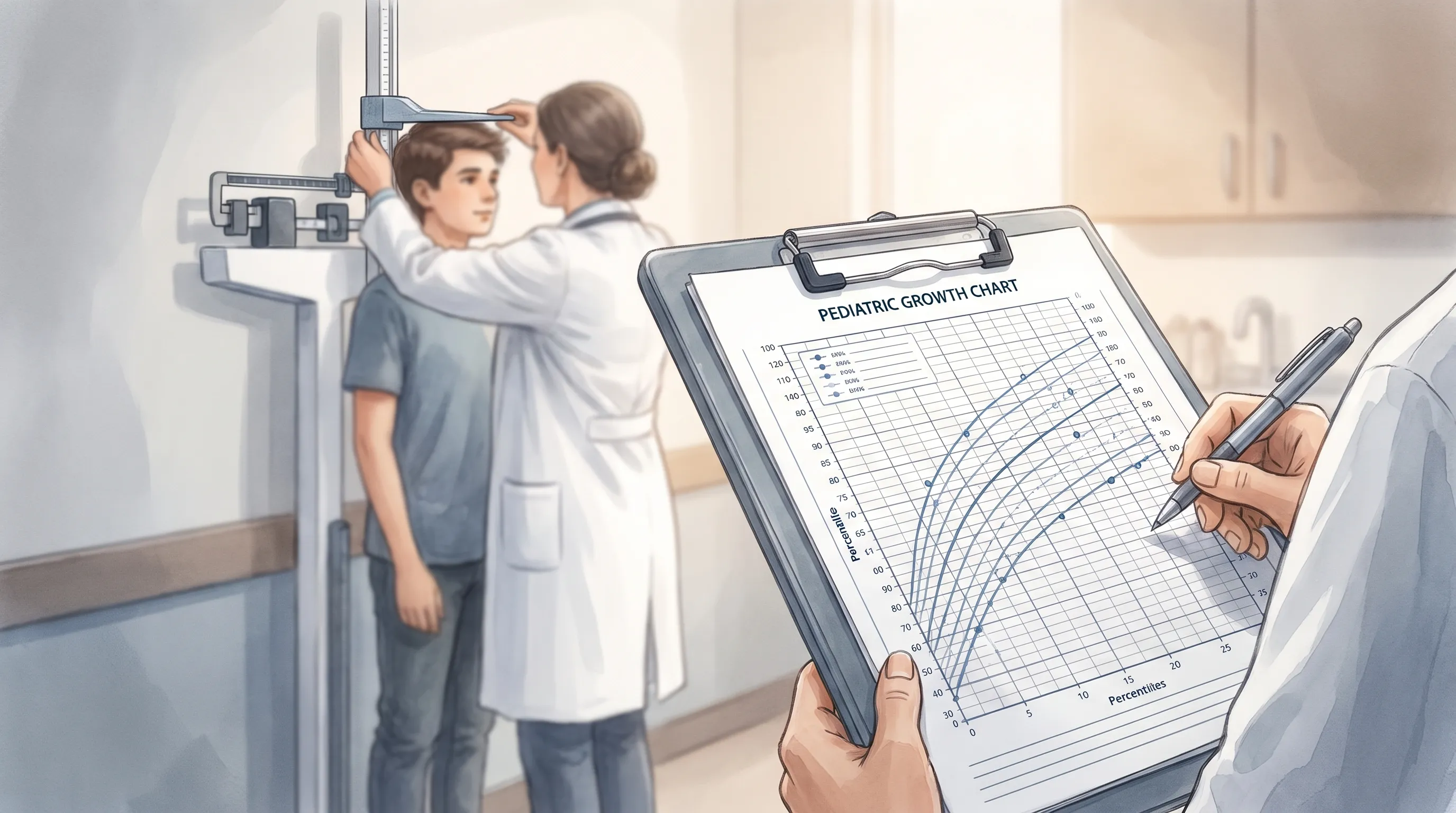
Growth charts do not prescribe an ideal height; instead, they map the normal distribution of growth within a healthy population. The CDC and WHO datasets establish that a normal clinical range spans from the 5th to the 95th percentile. For 13-year-old boys, this translates to a spectrum of 4 feet 9.5 inches to 5 feet 8.5 inches (146 cm to 174 cm). For girls, the normal clinical range spans 4 feet 10 inches to 5 feet 7.5 inches (147 cm to 171 cm). Any measurement within these boundaries falls within expected physiological variation. Clinicians emphasize that percentiles are statistical tools, not diagnostic thresholds, and that isolated measurements lack clinical utility without longitudinal context. Tracking serial measurements over time provides a far more accurate picture of developmental health than a single data point. You can review official clinical growth charts through the CDC Growth Charts portal and the WHO Growth Reference Data for 5-19 Years.
The 50th Percentile Explained
The term average height is frequently misunderstood as a target or a benchmark of normalcy. Medically, the 50th percentile simply means that 50% of the reference population is taller and 50% is shorter at that specific age. It represents the median, not a biological ideal. Growth velocity naturally decelerates after infancy, plateaus during middle childhood, and then accelerates dramatically during puberty. The 13th year of life captures the exact moment when many girls are decelerating from their pubertal growth spurt, while boys are often just beginning theirs. This timing difference explains why asking what is the average height for a 13 year old yields nearly identical statistical medians for both sexes, despite boys eventually achieving taller final adult heights. Understanding this temporary convergence helps parents avoid unnecessary anxiety when their child falls slightly above or below the 50th percentile.
| Percentile | Boys Height (in/cm) | Girls Height (in/cm) | Clinical Interpretation |
|---|---|---|---|
| 5th | 4'9.5" (146.0 cm) | 4'10" (147.0 cm) | Lower boundary of typical variation |
| 25th | 5'0.25" (153.0 cm) | 5'0" (152.5 cm) | Below median, within normal range |
| 50th | 5'1.5" (156.2 cm) | 5'1.75" (156.9 cm) | Statistical average (median) |
| 75th | 5'4.5" (164.0 cm) | 5'4.5" (163.5 cm) | Above median, within normal range |
| 95th | 5'8.5" (174.0 cm) | 5'7.5" (171.0 cm) | Upper boundary of typical variation |
Why Boys and Girls Are Nearly the Same Height at 13
The temporary height parity observed at age 13 is a direct consequence of differing pubertal timelines. Human growth follows a sexually dimorphic pattern dictated by the hypothalamic-pituitary-gonadal axis. In females, the onset of puberty typically begins between ages 8 and 13, with peak height velocity occurring around 11 to 12 years. By the time a girl reaches 13, her rapid growth phase is usually concluding, and she is approaching skeletal maturity. Males, however, typically initiate puberty between ages 9 and 14, with their growth spurt peaking between ages 13 and 15. Consequently, 13-year-old boys are often just entering their most rapid growth phase, which will continue for another two to three years before epiphyseal fusion halts longitudinal growth. This staggered developmental schedule creates the illusion that girls have stopped growing earlier, when in reality, they have simply progressed further along the same developmental continuum.
The Science Behind Adolescent Growth
To fully grasp what is the average height for a 13 year old and why it varies, we must examine the cellular and endocrine machinery driving skeletal elongation. Longitudinal bone growth is not a simple stretching process but a highly regulated sequence of cellular proliferation, hypertrophy, mineralization, and remodeling. This process occurs exclusively at the epiphyseal plates, specialized cartilaginous regions located at the ends of long bones such as the femur, tibia, humerus, and radius.
Growth Plates and Bone Development
Epiphyseal plates consist of distinct histological zones that orchestrate bone lengthening. In the resting zone, chondrocytes maintain a steady cellular pool. The proliferative zone features rapidly dividing chondrocytes that stack into columns, directly contributing to bone elongation. In the hypertrophic zone, cells enlarge significantly, secrete alkaline phosphatase, and prepare the cartilage matrix for calcification. Finally, the primary spongiosa undergoes vascular invasion, where osteoblasts and osteoclasts replace calcified cartilage with mature trabecular bone. This process, known as endochondral ossification, continues until sex hormones (primarily estrogen in both sexes) trigger epiphyseal fusion. In girls, growth plates typically close between ages 14 and 16. In boys, closure occurs between ages 16 and 18. Once fusion is radiographically confirmed on a bone age X-ray, no natural mechanism can increase standing height further.
The Role of Genetics vs. Environment
Height is one of the most heritable human traits, yet it is far from genetically predetermined in absolute terms. Contemporary genomic research confirms that adult stature is a polygenic trait influenced by thousands of single nucleotide polymorphisms (SNPs) distributed across the genome. Heritability estimates consistently place genetic contribution at 60% to 80%. Environmental factors account for the remaining 20% to 40% of variance. As noted in a landmark genetic epidemiology review, "Height is a polygenic trait influenced by hundreds of genetic variants, but environmental factors like nutrition and socioeconomic status account for up to 40% of the variance in final adult height." (Silventoinen et al., American Journal of Human Biology). Mid-parental height formulas offer a rough genetic prediction, but they cannot capture the complex gene-environment interactions that occur during critical adolescent windows. Optimizing nutrition, sleep hygiene, and physical activity ensures that a teenager reaches the upper bound of their genetically programmed potential.
Hormonal Drivers: Estrogen, Testosterone, and IGF-1
The endocrine system orchestrates adolescent growth through a precise hormonal cascade. Growth hormone (GH), secreted in pulsatile patterns from the anterior pituitary gland, stimulates hepatic production of insulin-like growth factor 1 (IGF-1). IGF-1 binds to receptors on epiphyseal chondrocytes, driving cellular proliferation and matrix synthesis. Sex steroids modulate this axis dramatically. Testosterone amplifies GH secretion and IGF-1 sensitivity in males, contributing to their prolonged and more intense growth spurt. Estrogen, surprisingly, plays a dominant role in both sexes by accelerating growth plate maturation and ultimately triggering epiphyseal closure. The dual role of estrogen explains why boys with estrogen receptor mutations or aromatase deficiency continue growing well into adulthood, while early estrogen exposure in girls leads to precocious puberty and reduced final adult stature. Understanding these hormonal dynamics clarifies why medical professionals monitor pubertal staging alongside height measurements when evaluating what is the average height for a 13 year old.
Puberty Timing and Growth Spurt Dynamics
Pubertal onset and progression follow predictable clinical patterns, yet individual variation remains substantial. Clinicians utilize the Tanner staging system to assess physical development across five stages of secondary sexual characteristics. Growth velocity directly correlates with Tanner progression rather than chronological age alone. Recognizing this distinction prevents misinterpretation of growth data and reduces parental anxiety during transitional periods.
Peak Height Velocity: When Does It Happen?
Peak height velocity (PHV) represents the maximum annual growth rate achieved during adolescence. For girls, PHV typically reaches 8 to 9 centimeters per year around Tanner stage 2 to 3, usually occurring at a median chronological age of 11.5 years. For boys, PHV is more pronounced, often reaching 10 to 12 centimeters per year at Tanner stage 3 to 4, with a median chronological age of 13.5 years. Research published in the Journal of Clinical Endocrinology & Metabolism by Tanner and Davies confirms that "Peak height velocity in girls occurs at a median bone age of 11.5 years, while in boys it occurs at 13.5 years. This sexual dimorphism explains temporary height overlaps during early adolescence." Because chronological age and bone age frequently diverge by up to two years in healthy adolescents, comparing 13-year-olds directly to population percentiles without considering pubertal maturity can yield misleading conclusions.
Early vs. Late Bloomers: What’s Normal?
Constitutional delay of growth and puberty is a common, benign variant that predominantly affects males. These adolescents experience delayed pubertal onset and later growth spurts, resulting in temporarily shorter stature during middle school and early high school years. Despite their slower progression, they follow a normal growth curve, experience normal PHV, and ultimately achieve heights consistent with their genetic potential. Conversely, early bloomers initiate puberty sooner, experience rapid early growth, and may appear taller than peers in early adolescence but experience earlier epiphyseal closure, often resulting in shorter final adult height than initially predicted. Both patterns fall within normal physiological variation. Clinical evaluation focuses on ruling out underlying endocrine, gastrointestinal, or genetic disorders rather than treating benign constitutional variants. Parents should understand that puberty timing exists on a continuum, and comparing children across vastly different developmental stages rarely yields meaningful insights into long-term outcomes.
Optimizing Height Potential: Evidence-Based Lifestyle Strategies
While genetics establish the blueprint for stature, environmental optimization determines whether a teenager constructs a full architectural masterpiece or leaves potential unrealized. The 20% to 40% environmental contribution to final adult height represents a powerful window of opportunity during early to mid-adolescence. Evidence-based interventions targeting nutrition, sleep architecture, and physical activity can maximize IGF-1 secretion, support chondrocyte proliferation, and promote optimal skeletal development.
Nutrition: Building Blocks for Bone Growth
Adequate caloric and micronutrient intake is non-negotiable for adolescent growth. Energy deficits signal metabolic stress, which suppresses the hypothalamic-pituitary axis and reduces GH and IGF-1 production. Protein provides the amino acid substrates for collagen synthesis and muscle development. Adolescents require approximately 0.85 to 1.0 grams of protein per kilogram of body weight daily, with complete sources including lean meats, dairy, eggs, legumes, and nuts. Calcium is essential for mineralizing the osteoid matrix. The recommended dietary allowance (RDA) for ages 9 to 18 is 1,300 mg daily, best obtained through dairy products, fortified plant milks, leafy greens, and fish with edible bones. Vitamin D facilitates intestinal calcium absorption and regulates osteoblast differentiation. Given limited dietary sources, 600 to 800 IU daily through sunlight exposure, fortified foods, or supplementation is widely recommended. Zinc acts as a cofactor for over 300 enzymes, including those involved in DNA replication and IGF-1 signaling. Deficiencies correlate with delayed pubertal onset and stunted linear growth. Ensuring balanced meals rich in these nutrients directly supports the biological infrastructure required for sustained adolescent growth.
Sleep and Growth Hormone Secretion
Sleep is not passive rest; it is an active neuroendocrine state critical for developmental physiology. Growth hormone secretion is intrinsically tied to sleep architecture, with the majority of daily pulses occurring during slow-wave (stage N3) sleep, particularly in the first half of the night. Chronic sleep deprivation, irregular sleep schedules, or poor sleep hygiene disrupts this hormonal rhythm, blunting IGF-1 production and impairing cellular recovery. The American Academy of Sleep Medicine recommends 8 to 10 hours of uninterrupted sleep per night for adolescents aged 13 to 18. Establishing consistent bedtimes, limiting blue light exposure from screens 60 minutes before sleep, maintaining a cool and dark sleeping environment, and avoiding heavy meals or caffeine late in the day significantly improve slow-wave sleep duration. Parents who prioritize sleep hygiene directly support their teen’s endocrine environment for optimal linear growth.
Physical Activity and Bone Density
Mechanical loading stimulates osteogenesis through Wolff’s Law, which states that bone adapts structurally to the stresses placed upon it. Weight-bearing and high-impact exercises such as running, jumping, basketball, volleyball, and resistance training create micro-strains in bone tissue, triggering osteoblast activation and increasing bone mineral density. While exercise does not directly lengthen growth plates beyond genetic limits, it enhances musculoskeletal strength, improves posture, and supports metabolic health. Regular physical activity also improves insulin sensitivity, which positively modulates IGF-1 bioavailability. Furthermore, exercise promotes deeper sleep cycles, creating a synergistic effect on growth hormone secretion. Sedentary behavior, conversely, correlates with reduced bone density, poor metabolic profiles, and disrupted sleep architecture. Encouraging at least 60 minutes of moderate-to-vigorous physical activity daily aligns with pediatric guidelines and supports comprehensive developmental health.

When to Seek Medical Advice: Red Flags and Monitoring
Monitoring growth is a standard component of well-child visits, but understanding when to transition from routine tracking to clinical evaluation requires recognizing specific warning signs. Pediatricians rely on serial measurements, growth velocity calculations, and pubertal staging rather than single-point comparisons. The CDC emphasizes that "Adolescent growth is best monitored using serial measurements plotted on standardized growth charts. A single height measurement provides limited clinical value without context of growth velocity and pubertal stage." Knowing how to interpret these metrics empowers caregivers to make timely healthcare decisions.
Tracking Growth Velocity Correctly
Growth velocity refers to the rate of linear growth over a defined period, typically measured in inches or centimeters per year. Before puberty, children normally grow 2 to 3 inches (5 to 7.5 cm) annually. During peak height velocity, girls can grow up to 3.5 inches (9 cm) per year, and boys up to 4 inches (10 cm) per year. A significant deviation from expected velocity warrants investigation. To measure accurately, record height at the same time of day using a wall-mounted stadiometer, ensure proper posture (Frankfort horizontal plane), and track measurements every 6 to 12 months. Plot these points on official percentile curves to visualize trends rather than focusing on isolated numbers. Consistent downward crossing of two major percentile lines indicates a potential deviation from genetic trajectory that requires medical evaluation.
Warning Signs That Require a Pediatrician Visit
Certain clinical indicators transcend normal statistical variation and necessitate professional assessment. Parents should consult a pediatrician or pediatric endocrinologist if their 13-year-old exhibits height below the 5th percentile, demonstrates growth velocity less than 2 inches per year prior to completion of puberty, crosses downward across two percentile lines on growth charts, or shows no signs of pubertal development by age 13 in girls or age 14 in boys. Conversely, signs of precocious puberty before age 8 in girls or age 9 in boys, accompanied by rapid early growth and accelerated bone age, also require evaluation. Medical workups may include comprehensive metabolic panels, thyroid function tests, celiac screening, IGF-1 levels, and left-hand/wrist bone age radiographs to assess skeletal maturity. Early identification of underlying conditions such as growth hormone deficiency, hypothyroidism, Turner syndrome, or chronic systemic illnesses enables timely intervention, which can significantly improve final adult height and overall health outcomes.
Debunking Common Myths About Teen Growth
The internet and social media are saturated with pseudoscientific claims promising rapid height increases through unverified methods. Separating fact from fiction is crucial for protecting adolescents from financial exploitation, nutritional harm, and psychological distress. Evidence-based medicine consistently demonstrates that once growth plates fuse, no commercial product, exercise routine, or dietary supplement can increase longitudinal bone length. Understanding the physiological limits of human growth prevents unnecessary interventions and redirects focus toward scientifically supported health optimization.
Do Stretching Exercises Increase Height?
A pervasive myth suggests that daily stretching, hanging from bars, or practicing specific yoga poses can permanently lengthen bones. Anatomically, this is impossible. Long bones grow exclusively through endochondral ossification at the epiphyseal plates. Stretching elongates muscles, tendons, and ligaments, and may temporarily decompress intervertebral discs in the spine, resulting in a temporary gain of up to half an inch in standing height upon waking. However, this effect reverses within hours as gravity compresses the spinal column throughout the day. While flexibility training improves range of motion, reduces injury risk, and supports musculoskeletal health, it does not alter skeletal dimensions or increase final adult stature. Parents should frame exercise as a tool for strength, posture, and metabolic health rather than height modification.
Can Supplements Guarantee Taller Teens?
The dietary supplement industry aggressively markets height-growth pills, herbal blends, and unregulated amino acid formulas targeting insecure adolescents. No peer-reviewed clinical trial supports the efficacy of over-the-counter height supplements in healthy teenagers. Many contain unproven herbal extracts, excessive doses of single vitamins, or undisclosed ingredients that pose safety risks. The only FDA-approved medical therapy for documented growth hormone deficiency involves prescription recombinant human growth hormone, administered under strict endocrinology supervision after extensive diagnostic testing. Self-medicating with unregulated products can disrupt natural hormonal balance, cause liver or kidney strain, and delay legitimate medical care when underlying conditions exist. Nutritional optimization through whole foods remains the safest and most effective approach for supporting genetic height potential. Consulting a pediatrician before introducing any supplement ensures safety, appropriateness, and alignment with established clinical guidelines.
Frequently Asked Questions
Why are 13-year-old girls often the same height or taller than boys?
At age 13, girls have typically already experienced their peak height velocity, which usually occurs between ages 11 and 12 due to earlier pubertal onset. Boys generally begin their growth spurt 1 to 2 years later, typically between ages 13 and 15. This natural timing difference creates a temporary height overlap at age 13 before boys typically surpass girls in their mid-teens. This phenomenon reflects normal sexual dimorphism in human development rather than a medical abnormality.
How can parents accurately track their child's growth at home?
For accurate tracking, measure height at the same time of day (preferably morning, before spinal compression occurs), barefoot on a hard surface, using a wall-mounted stadiometer or a rigid ruler. Record measurements every 3 to 6 months, plot them on standardized CDC or WHO growth charts, and focus on the growth trajectory rather than isolated numbers. Consistency in technique, posture alignment, and timing yields far more clinically useful data than occasional high-precision measurements taken under varying conditions.
Can stretching or yoga exercises permanently increase height at age 13?
No. Stretching, yoga, or hanging exercises cannot lengthen long bones once growth plates are active, nor can they alter genetic potential. However, these activities can improve posture, decompress the spine temporarily, and reduce spinal disc compression, which may make a teen appear slightly taller by maximizing their natural standing alignment. They should be incorporated for musculoskeletal health and flexibility rather than height modification.
What nutrients are most critical for supporting adolescent bone growth?
The most critical nutrients include high-quality protein (for IGF-1 production and collagen matrix), calcium (approximately 1,300 mg daily for ages 9-18 for hydroxyapatite formation), vitamin D (600 IU daily to enable intestinal calcium absorption), and zinc (crucial for cellular division and growth hormone metabolism). Deficiencies in these micronutrients during puberty can permanently limit genetic height potential. A balanced diet rich in whole foods remains superior to isolated supplementation in the absence of clinically diagnosed deficiencies.
When should parents consult a pediatrician about their 13-year-old's height?
Clinical evaluation is warranted if a child falls below the 5th percentile for height, crosses downward across two major percentile lines on growth charts, grows less than 2 inches per year before puberty is complete, or shows signs of delayed or precocious puberty (such as no breast development by age 13 in girls or no testicular enlargement by age 14 in boys). A pediatric endocrinologist can assess bone age, order hormonal panels, and rule out underlying systemic conditions.
Conclusion
Understanding what is the average height for a 13 year old requires shifting perspective from isolated measurements to longitudinal developmental trajectories. At age 13, adolescents typically stand between 4'9.5" and 5'8.5" depending on biological sex, pubertal timing, and genetic background, with statistical averages hovering around 5'1.5" to 5'1.75". This convergence is temporary, reflecting the staggered timing of peak height velocity rather than a permanent alignment of growth outcomes. The human skeleton responds to a precise orchestration of genetic programming, hormonal signaling, nutritional availability, sleep architecture, and mechanical loading. By prioritizing balanced nutrition, consistent sleep hygiene, regular weight-bearing activity, and routine pediatric monitoring, caregivers can ensure teenagers navigate this critical developmental window optimally. Medical evaluation remains essential when growth velocity deviates significantly from established trajectories or pubertal milestones are markedly delayed. Height is ultimately one metric among many that reflect overall health. Focusing on holistic wellness, fostering positive body image, and avoiding commercial growth myths equips adolescents to thrive physically and psychologically as they transition into adulthood. For ongoing guidance, trusted resources like the American Academy of Pediatrics and peer-reviewed endocrinology references from NCBI Endotext provide evidence-based frameworks for supporting healthy adolescent development.
How we work
Researched and drafted with AI assistance, then reviewed by a human editor against the cited sources.
This article is general health information, not medical advice. Consult a qualified healthcare professional about your own situation.