Understanding 80 Proof Alcohol: Science, Safety, and Serving Guide

When navigating the vast world of spirits, few terms appear as frequently yet remain as widely misunderstood as proof. Among the countless options lining store shelves, 80 proof alcohol stands as the undisputed industry standard, representing the baseline concentration for most commercially available vodkas, whiskeys, rums, and tequilas. While casual drinkers often assume that higher proof automatically equates to greater intoxication or better quality, the reality is far more nuanced and deeply rooted in chemistry, physiology, and public health guidelines from the CDC. Understanding what 80 proof alcohol truly means requires examining the historical measurement systems, the precise mathematical conversions used today, and the biological pathways your body activates the moment a sip reaches your bloodstream. For health-conscious consumers, mastering this information is not merely a matter of beverage trivia; it is an essential component of responsible consumption, accurate portion tracking, and long-term physiological wellness. Whether you are a curious home bartender, a fitness-focused individual tracking empty calories, or someone navigating medication protocols, recognizing how 80 proof alcohol interacts with human biology empowers you to make safer, more informed choices. The following comprehensive guide breaks down the science, safety protocols, practical serving strategies, and evidence-based health considerations you need to navigate this category with confidence and clarity.
What Does Proof Actually Mean in Liquor?
The Historical Origins of Alcohol Proof
The term proof originated in sixteenth-century England as a crude but practical method for merchants and naval officers to verify the alcohol content of gunpowder-soaked spirits. Sailors would pour a small amount of rum over gunpowder and attempt to ignite it. If the mixture sustained a steady flame, the spirit was considered proof that it contained sufficient alcohol to maintain strength during long sea voyages. If the gunpowder failed to light, the liquid had been overly diluted and was deemed unproven. This rudimentary fire test eventually evolved into standardized measurement systems, with the British proof system establishing one hundred proof as roughly 57.15 percent alcohol by volume. The United States adopted a simpler mathematical model in 1848, defining proof as exactly twice the percentage of alcohol by volume. This American standard streamlined taxation, quality control, and consumer transparency, creating the straightforward calculation still used today. Historical context matters because it explains why modern bottles carry both ABV and proof designations, bridging centuries-old maritime tradition with contemporary regulatory frameworks.
Free calculatorBAC CalculatorBlood Alcohol Content calculatorOpen the calculatorThe Modern Mathematical Conversion
In the United States, calculating proof requires nothing more than a basic multiplication formula. Alcohol by volume, expressed as a percentage, is multiplied by two to determine the proof value. Therefore, a beverage containing 40 percent ethanol is labeled as 80 proof. This straightforward conversion eliminates ambiguity for consumers who need to calculate standard drink servings accurately. International markets vary significantly; the European Union, Australia, and most scientific literature exclusively use ABV percentages without referencing proof. Consequently, travelers and expatriates must mentally adjust when interpreting international labels. The mathematical simplicity of the American system serves a practical purpose: it allows bartenders, healthcare providers, and regulatory agencies to quickly compare concentrations across categories. When evaluating 80 proof alcohol, you are essentially interacting with a solution that contains forty milliliters of pure ethanol per one hundred milliliters of liquid. Recognizing this precise ratio transforms abstract bottle labels into quantifiable nutritional and metabolic data.
Why 80 Proof Is the Industry Standard
Distillers and commercial producers settle on 80 proof for multiple scientific and economic reasons. During the fermentation process, yeast naturally converts sugars into ethanol, but yeast viability typically caps around 15 percent ABV due to alcohol toxicity. To achieve higher concentrations, producers utilize fractional distillation, which separates ethanol from water based on differing boiling points. Reaching exactly 40 percent ABV strikes an optimal balance between potency, flavor preservation, and production efficiency. Lower proof spirits often retain excessive congeners and residual sugars that complicate shelf stability, while significantly higher proofs introduce harsh ethanol burn that masks terroir and botanical notes. From a regulatory standpoint, 80 proof aligns with established taxation brackets and standard drink definitions defined by federal health agencies (NIAAA). Most federal health guidelines assume a 40 percent concentration when calculating safe consumption thresholds, making 80 proof alcohol the default reference point for public education campaigns, medical screenings, and nutritional labeling.
Understanding the Science of Alcohol Metabolism
How Your Body Processes Ethanol
The moment 80 proof alcohol enters your digestive system, a complex biochemical cascade begins. Unlike most macronutrients, ethanol requires no digestion; approximately twenty percent absorbs rapidly through the stomach lining, while the remaining eighty percent passes to the small intestine for efficient vascular uptake. Once in the bloodstream, alcohol travels directly to the liver, the primary metabolic processing center. The human body lacks specialized storage mechanisms for ethanol, forcing immediate enzymatic breakdown to prevent systemic toxicity. Blood alcohol concentration peaks within thirty to ninety minutes after consumption, depending on gastric emptying rates, presence of food, and individual genetic variations. Understanding this absorption timeline clarifies why pacing matters more than beverage type when managing intoxication levels (Cleveland Clinic). The pharmacokinetics of ethanol remain remarkably consistent across individuals, meaning that drinking patterns, rather than alcohol proof alone, dictate physiological outcomes.
The Role of Enzymes in Breaking Down Spirits
Ethanol metabolism relies primarily on two hepatic enzymes: alcohol dehydrogenase (ADH) and aldehyde dehydrogenase (ALDH). ADH initiates the breakdown process by converting ethanol into acetaldehyde, a highly toxic and carcinogenic metabolite responsible for hangover symptoms, facial flushing, and cellular damage. ALDH subsequently transforms acetaldehyde into acetate, a relatively benign compound that enters the Krebs cycle for eventual excretion as carbon dioxide and water. Genetic polymorphisms significantly influence enzyme efficiency; approximately thirty-six percent of East Asian populations possess an ALDH deficiency that causes rapid acetaldehyde accumulation, resulting in pronounced flushing and increased health risks (NIH). Additionally, chronic alcohol exposure upregulates the microsomal ethanol-oxidizing system (MEOS), creating metabolic tolerance while accelerating liver stress. Recognizing these biochemical pathways highlights why 80 proof alcohol demands careful moderation: higher ethanol loads overwhelm enzymatic capacity, allowing acetaldehyde to accumulate and inflict oxidative damage on cellular membranes.
Factors That Influence Blood Alcohol Concentration (BAC)
Multiple variables determine how quickly 80 proof alcohol elevates your blood alcohol concentration beyond legal or physiological safety thresholds. Biological sex plays a prominent role; females typically possess lower total body water percentages and reduced gastric ADH activity, causing equivalent servings to generate higher BAC levels. Age naturally reduces hepatic blood flow and enzymatic efficiency, prolonging clearance times. Body composition significantly impacts distribution volume, with higher muscle mass diluting ethanol more effectively than adipose tissue. Hydration status, medication use, sleep deprivation, and concurrent food intake further modulate absorption and elimination rates. Consuming spirits on an empty stomach accelerates gastric emptying, spiking BAC within minutes, whereas balanced meals containing protein, fiber, and healthy fats slow transit time and flatten peak concentrations (Mayo Clinic). Understanding these interacting factors enables personalized risk assessment and informed decision-making when consuming concentrated ethanol beverages.
Health Impacts of Consuming 80 Proof Alcohol
Short-Term Physiological Effects
Immediate consumption triggers predictable, dose-dependent responses across multiple organ systems. The central nervous system experiences rapid GABA receptor enhancement alongside NMDA receptor inhibition, producing sedation, reduced inhibition, and impaired motor coordination. The cardiovascular system initially dilates peripheral blood vessels, causing warmth and facial flushing, followed by reflex tachycardia as blood pressure normalizes. Gastrointestinal irritation frequently occurs, particularly when 80 proof alcohol contacts the gastric mucosa without food buffering, potentially triggering acid reflux, nausea, or transient gastritis. Diuretic effects emerge as ethanol suppresses vasopressin release in the pituitary gland, increasing renal water excretion and accelerating dehydration. Cognitive processing slows noticeably, compromising reaction time, spatial judgment, and working memory within twenty minutes of ingestion. Recognizing these acute physiological markers allows individuals to self-monitor safely and intervene before impairment escalates beyond manageable thresholds.
Long-Term Consequences of Regular Consumption
Chronic exposure to concentrated ethanol initiates progressive tissue adaptation and cumulative organ damage. The liver undergoes sequential stages of injury, beginning with hepatic steatosis (fatty liver), advancing to alcoholic hepatitis characterized by inflammation and hepatocyte death, and potentially culminating in irreversible cirrhosis with scar tissue replacing functional architecture (WHO). Pancreatic exocrine function deteriorates, increasing susceptibility to acute and chronic pancreatitis. Neurological adaptations remodel synaptic connectivity, altering reward pathways and elevating dependency risk. Bone marrow suppression reduces red and white blood cell production, compromising immune response and oxygen delivery. Long-term 80 proof alcohol consumption also disrupts endocrine signaling, elevating cortisol, impairing testosterone synthesis, and altering thyroid hormone conversion. These progressive alterations demonstrate why consistent, excessive intake fundamentally rewrites human physiology, necessitating strict adherence to established consumption guidelines.
Cardiovascular, Liver, and Neurological Considerations
Cardiovascular research presents a complex relationship between alcohol and heart health. While early observational studies suggested mild protective effects from light consumption, contemporary meta-analyses reveal that any amount increases hypertension risk, atrial fibrillation incidence, and cardiomyopathy development (Mayo Clinic). The myocardium experiences direct toxic effects, thinning ventricular walls and reducing ejection fraction over time. Hepatic processing demands intensify with regular intake, depleting glutathione reserves and amplifying oxidative stress. Neurological tissue lacks robust regenerative capacity, making hippocampal volume reduction and cerebellar atrophy particularly concerning among chronic consumers. White matter degradation compromises executive function, while thiamine deficiency precipitates Wernicke-Korsakoff syndrome in severe cases. Understanding these organ-specific vulnerabilities reinforces the medical consensus that moderation, rather than elimination alone, requires strategic portion control and mandatory alcohol-free recovery days.
Safe Consumption Guidelines & Practical Tips
Standard Drink Measurements Demystified
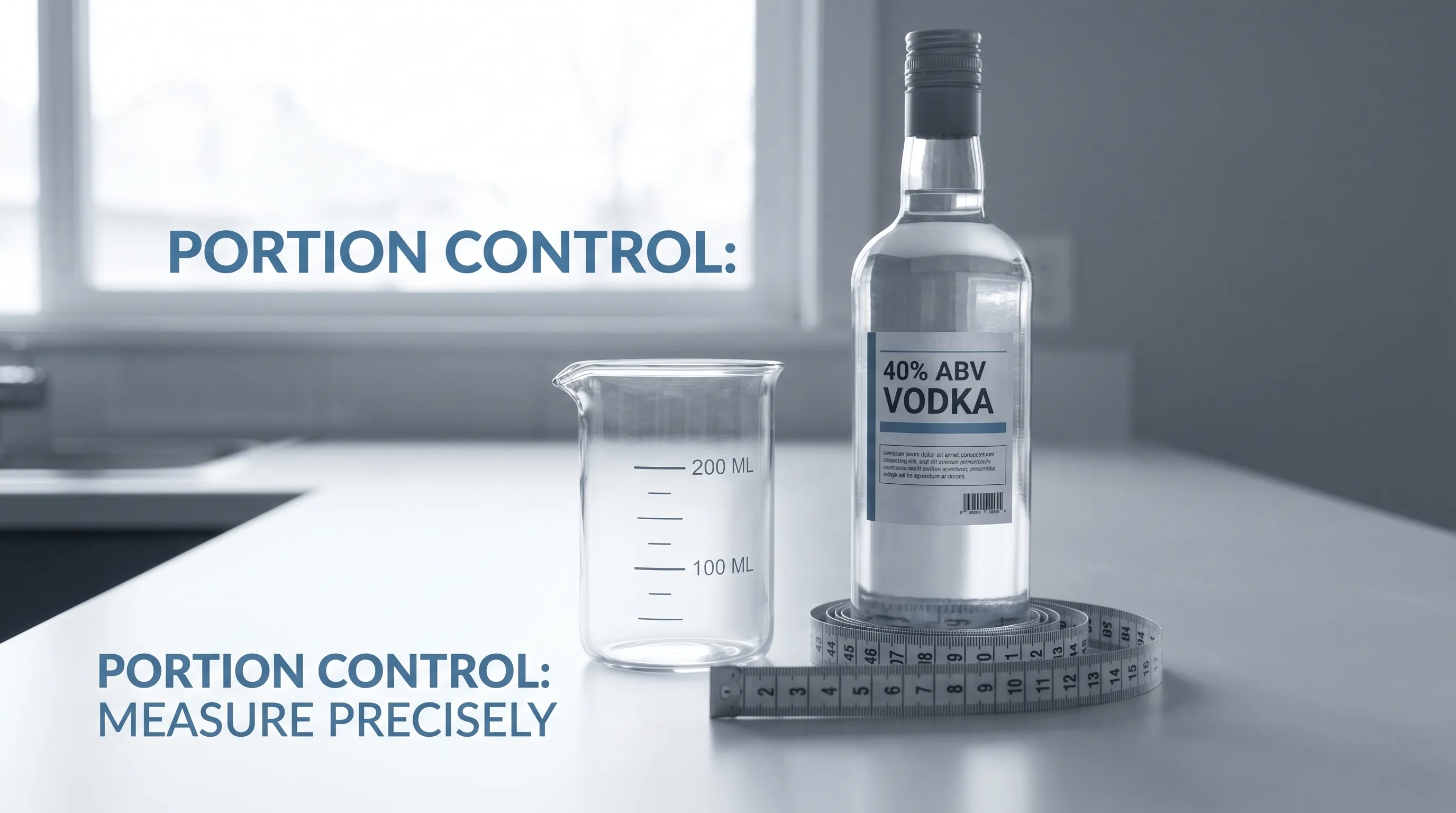
Federal health agencies define one standard drink as containing precisely fourteen grams of pure ethanol. For 80 proof alcohol, this translates to exactly 1.5 fluid ounces, or approximately forty-four milliliters. This measurement remains consistent regardless of whether the beverage originates from distilled grain, fermented grape, or tropical sugar cane (CDC). Misconceptions frequently arise when consumers pour directly from bottles without measuring, often generating servings ranging from two to four ounces. Such unintentional overpouring rapidly doubles or triples ethanol intake beyond recommended limits, bypassing metabolic clearance capacity and elevating BAC unpredictably. Utilizing calibrated jiggers, shot glasses with fill lines, or digital pouring scales transforms abstract guidelines into measurable daily practices. Tracking standard drinks rather than container volume provides accurate nutritional and metabolic accounting.
Pacing, Hydration, and Food Pairing
Implementing a structured consumption rhythm significantly mitigates acute intoxication risks. Medical professionals recommend limiting intake to one standard drink per hour, allowing hepatic enzymes adequate processing time before introducing additional ethanol. Interleaving each serving with eight ounces of plain water or electrolyte solutions counteracts vasopressin suppression, maintaining plasma volume and reducing headache probability. Strategic food pairing further stabilizes absorption; consuming 80 proof alcohol alongside meals rich in complex carbohydrates, lean protein, and unsaturated fats delays gastric emptying while providing nutritional buffering. Avoid pairing concentrated spirits with carbonated beverages on an empty stomach, as carbon dioxide accelerates ethanol absorption through the gastric lining. Establishing pre-planned consumption windows, setting firm stop times, and designating non-alcoholic days creates sustainable patterns aligned with physiological recovery requirements.
Strategies for Responsible Enjoyment
Responsible consumption extends beyond portion measurement into behavioral and environmental management. Pre-registering intended serving quantities before events prevents impulsive escalation driven by social pressure or celebratory momentum. Designating a trusted friend to monitor consumption patterns provides objective feedback when self-awareness diminishes. Maintaining a written or digital consumption log reveals personal tolerance thresholds and identifies high-risk situations requiring adjusted protocols. When preparing cocktails, prioritizing lower-proof mixers and incorporating fresh citrus or herbal infusions reduces total ethanol intake per beverage while preserving sensory satisfaction. Recognizing personal limits, respecting medication contraindications, and adhering to established federal guidelines transforms casual enjoyment into a health-conscious practice compatible with long-term wellness objectives.
Mixing, Serving, and Quality Selection
How Dilution Changes the Experience
Introducing non-alcoholic liquids fundamentally alters the physical properties and sensory perception of 80 proof alcohol. Water reduces viscosity, allowing aromatic compounds to volatilize more efficiently and reach olfactory receptors. Ice serves dual purposes: temperature suppression diminishes ethanol vaporization while gradual melting controls dilution rates over extended sipping periods. Over-dilution, however, flattens structural complexity and introduces flat, watery mouthfeel that masks intended flavor profiles. Understanding optimal dilution thresholds requires recognizing that approximately twenty percent water integration often maximizes aromatic expression without compromising balance. Professional bartenders utilize controlled shaking or stirring times to achieve precise temperature and dilution targets, ensuring consistency across servings.
Choosing Quality Over Quantity
Selecting premium 80 proof spirits prioritizes production transparency, ingredient sourcing, and distillation precision over marketing narratives. Higher-quality brands typically employ multiple distillation passes, rigorous congeners management, and extended aging protocols that smooth harsh ethanol edges. Reading labels for additive disclosures, filtration methods, and distillation proofs provides objective quality indicators. Budget constraints need not compromise safety; numerous mid-tier producers maintain strict quality control standards while avoiding unnecessary markups. Evaluating independent laboratory analyses, consumer transparency reports, and production methodologies enables informed purchasing decisions that align with both sensory preferences and health-conscious standards.
Common Cocktails Built on 80 Proof Spirits
Classic recipes leverage the precise ethanol concentration of 80 proof alcohol to achieve consistent balance across flavor components. The Old Fashioned relies on controlled sugar dissolution and bitters integration to complement whiskey without overwhelming the spirit base. Martinis demonstrate the necessity of proper chilling and minimal vermouth ratios to preserve juniper and botanical character. Daiquiris utilize fresh citrus acidity to counterbalance rum sweetness while maintaining clear spirit prominence. Negronis depend on exact equal-part measurements to achieve bitter-sweet equilibrium. Understanding how 80 proof alcohol functions within established frameworks empowers home mixologists to adjust ratios intentionally while preserving intended sensory architecture and metabolic safety.
Interactions, Contraindications, and When to Abstain
Medication Conflicts You Must Know
Ethanol competitively inhibits cytochrome P450 enzymes responsible for metabolizing numerous pharmaceutical compounds. Acetaminophen combines with alcohol to deplete hepatic glutathione, exponentially increasing liver toxicity risk. Anticoagulants like warfarin experience unpredictable clotting factor alterations, elevating hemorrhage probability. Antidepressants, antipsychotics, and anxiolytics amplify central nervous system depression, potentially triggering respiratory compromise or severe sedation. Antihypertensives may experience exaggerated vasodilation, precipitating orthostatic hypotension and syncope. Over-the-counter antihistamines and sleep aids compound GABAergic effects, impairing cognitive and motor function beyond expected parameters. Consulting prescribing physicians or pharmacists before combining any medication with 80 proof alcohol prevents dangerous pharmacokinetic interactions (NIAAA).
Conditions That Warrant Complete Avoidance
Certain physiological states render ethanol consumption medically contraindicated regardless of proof level. Pregnancy exposes developing fetal neurological tissue to teratogenic effects, increasing fetal alcohol spectrum disorder risk across all trimesters (CDC). Active gastrointestinal ulcers, severe pancreatitis, and decompensated cirrhosis require complete abstinence to prevent disease exacerbation. Uncontrolled diabetes experiences hypoglycemic episodes as hepatic glucose production suppresses during ethanol metabolism. Individuals recovering from substance use disorder face neurochemical relapse triggers that compromise sustained sobriety efforts. Autoimmune conditions often flare in response to systemic inflammation induced by acetaldehyde accumulation. Recognizing these absolute contraindications ensures patient safety aligns with established clinical guidelines.
Recognizing Signs of Problematic Use
Early intervention prevents progression toward alcohol use disorder by identifying behavioral and physiological warning signals. Increasing tolerance requiring larger quantities for equivalent effects indicates enzymatic upregulation and neuroadaptation. Neglecting responsibilities, isolating socially, or consuming despite physical complications signals compulsive patterns. Morning drinking to alleviate withdrawal symptoms demonstrates physiological dependence. Failed reduction attempts and persistent craving despite negative consequences align with diagnostic criteria requiring professional assessment. Accessing licensed counselors, medical detox protocols, and peer support networks provides evidence-based pathways toward sustainable recovery. Acknowledging problematic patterns without shame enables proactive healthcare engagement (NIH).
| Metric | 80 Proof Alcohol | 70 Proof Alcohol | 100 Proof Alcohol |
|---|---|---|---|
| ABV Percentage | 40% | 35% | 50% |
| Standard Drink Volume | 1.5 oz | 1.7 oz | 1.2 oz |
| Ethanol per Ounce (g) | ~11.3 | ~9.9 | ~14.1 |
| Typical Applications | Base spirits, mixed drinks | Light cocktails, lower-calorie options | Neat sipping, high-concentration cocktails |
| Metabolic Clearance Time (avg) | ~1 hour | ~1 hour | ~1 hour |
| Dehydration Potential | Moderate | Moderate | High |

Frequently Asked Questions
What does 80 proof actually mean?
Eighty proof indicates that the beverage contains exactly forty percent alcohol by volume. In the United States, proof values are calculated by doubling the ABV percentage. This standardized measurement allows consumers to quickly compare ethanol concentrations across different spirit categories and calculate accurate standard drink servings.
How quickly does the body metabolize 80 proof spirits?
The human liver processes ethanol at a relatively constant rate of approximately one standard drink per hour, regardless of whether the source is beer, wine, or 80 proof liquor. Consuming beyond this threshold causes unmetabolized ethanol to accumulate in the bloodstream, steadily increasing blood alcohol concentration and extending recovery time.
Is 80 proof alcohol healthier than lower proof options?
Health impact correlates with total ethanol consumed rather than proof designation. While 80 proof spirits deliver concentrated alcohol in smaller volumes, they do not offer physiological advantages over lower proof alternatives. Responsible consumption depends on measuring exact ethanol grams, pacing intake, and adhering to established dietary and medical guidelines.
Does mixing 80 proof alcohol with water or soda reduce intoxication?
Diluting spirits reduces ethanol concentration per sip, which may naturally slow consumption pace. However, the total ethanol content remains unchanged. The liver still metabolizes the identical quantity of alcohol, meaning overall blood alcohol concentration and physiological impact depend entirely on total volume consumed, not beverage strength alone.
Should people with medication avoid 80 proof alcohol?
Many prescription and over-the-counter medications interact dangerously with ethanol through competitive enzyme inhibition, enhanced central nervous system depression, or amplified hepatotoxicity. Consulting a licensed healthcare provider or pharmacist before consuming alcohol alongside medication prevents severe adverse reactions, including respiratory compromise, hypoglycemia, and organ damage.
Conclusion
Navigating the world of 80 proof alcohol requires moving beyond marketing terminology and embracing evidence-based understanding. Recognizing that proof simply represents alcohol by volume multiplied by two transforms abstract bottle labels into quantifiable metabolic data. Understanding hepatic enzymatic pathways, standard drink mathematics, and individual physiological variables empowers consumers to make informed, health-conscious decisions. Prioritizing measured pouring, strategic pacing, hydration maintenance, and food integration aligns casual enjoyment with long-term wellness objectives. Acknowledging medication interactions, absolute contraindications, and early warning signs of problematic use ensures safety remains paramount. Whether you are selecting a base spirit for weekend entertaining or simply seeking clarity on nutritional implications, applying these scientifically grounded principles protects physiological integrity while preserving social enjoyment. Responsible consumption ultimately rests on precise measurement, mindful pacing, and unwavering respect for human biology. By integrating these practices into your routine, you transform potential health risks into manageable, informed choices that support both immediate wellbeing and lifelong vitality.
How we work
Researched and drafted with AI assistance, then reviewed by a human editor against the cited sources.
This article is general health information, not medical advice. Consult a qualified healthcare professional about your own situation.