Echo Test Price: Complete Cost Breakdown & Savings Guide

Understanding the financial landscape of modern cardiology care requires navigating a complex web of facility fees, professional charges, and insurance policies. For patients scheduled to evaluate their cardiac health, the echo test price often emerges as a primary concern, sometimes overshadowing the clinical benefits of the procedure itself. An echocardiogram remains one of the most vital, non-invasive diagnostic tools available in contemporary medicine, offering unparalleled insights into heart structure, valve function, and blood flow dynamics. Yet, without clear financial transparency, patients frequently find themselves blindsided by unexpected bills or confusing statements. This comprehensive guide demystifies the pricing architecture behind cardiac ultrasound examinations, breaks down average costs across different healthcare settings, and provides actionable strategies for securing affordable, high-quality care. Whether you are paying out of pocket, navigating employer-sponsored coverage, or managing a high-deductible health plan, knowing exactly how to evaluate and manage your echo test price empowers you to make informed healthcare decisions. By exploring facility fees, physician interpretation charges, geographic cost variations, and federal price transparency regulations, you will gain the knowledge necessary to advocate for yourself, avoid financial surprises, and prioritize your cardiovascular wellness without compromising your financial stability.
What Is an Echo Test and Why Is It Performed?
An echocardiogram, commonly referred to as an echo, utilizes high-frequency sound waves to generate real-time moving images of the heart. Unlike computed tomography (CT) scans or magnetic resonance imaging (MRI), echocardiography involves zero ionizing radiation, making it exceptionally safe for repeated use across all age demographics, including pediatric and geriatric populations. The procedure relies on a transducer probe placed directly on the chest wall, which emits ultrasound pulses that bounce off cardiac structures and return to the probe. These returning echoes are processed by a computer to create detailed two-dimensional, three-dimensional, and Doppler images. Cardiologists and sonographers analyze these visuals to assess chamber dimensions, wall thickness, contractility, valvular motion, and hemodynamic pressures. Mayo Clinic
Free calculatorMAP CalculatorMean Arterial Pressure calculatorOpen the calculatorThe clinical utility of an echocardiogram extends across numerous cardiovascular conditions. It serves as the gold standard for evaluating heart failure, identifying the specific type—whether systolic or diastolic—and quantifying ejection fraction. It is indispensable in diagnosing valvular heart diseases such as stenosis, regurgitation, and prolapse. Congenital heart defects, pericardial effusions, intracardiac masses, and thrombi are also clearly visualized during standard examinations. Furthermore, stress echocardiography provides critical prognostic data by comparing cardiac function at rest and during peak physical exertion or pharmacologic stimulation, effectively detecting ischemia and coronary artery disease without requiring invasive catheterization. American Heart Association
Types of Echocardiograms Available
Not all echocardiograms are performed identically, and the specific modality ordered directly impacts both clinical accuracy and associated costs. Transthoracic echocardiography (TTE) represents the most common approach, where the transducer is maneuvered across the anterior chest, subcostal, and suprasternal windows. It requires minimal preparation and typically concludes within thirty to forty-five minutes. Transesophageal echocardiography (TEE), conversely, involves advancing a specialized probe through the esophagus to obtain proximity views of posterior cardiac structures like the left atrial appendage, mitral valve apparatus, and aortic root. TEE necessitates conscious sedation, fasting protocols, and extended recovery monitoring, which inherently elevates facility utilization and staffing requirements.
Stress echocardiography introduces a physiological challenge component, utilizing treadmill exercise or intravenous agents such as dobutamine to increase myocardial oxygen demand. Contrast echocardiography employs microbubble contrast agents to enhance endocardial border definition in patients with suboptimal acoustic windows. Fetal echocardiography is a specialized subspecialty procedure performed during pregnancy to assess developing fetal hearts for structural anomalies. Each variant demands distinct equipment calibration, personnel expertise, and procedural time, all of which factor into the final echo test price.
Conditions Diagnosed and Monitored
Echocardiography plays a pivotal role in both initial diagnosis and longitudinal disease management. Patients presenting with unexplained dyspnea, chest pain, peripheral edema, or exertional fatigue routinely undergo baseline studies to establish cardiac functional parameters. Hypertensive individuals benefit from serial imaging to detect left ventricular hypertrophy before irreversible remodeling occurs. Oncology patients receiving anthracycline chemotherapy undergo surveillance scans to monitor for cardiotoxicity and trigger cardio-protective interventions when ejection fraction declines below established thresholds. Post-myocardial infarction patients require echo assessments to evaluate regional wall motion abnormalities, identify viable myocardium, and guide revascularization decisions. The versatility and diagnostic precision of this modality justify its widespread utilization, though understanding the associated financial obligations remains essential for comprehensive patient care.
Breaking Down the Echo Test Price: Key Cost Drivers
The financial structure of an echocardiogram encompasses multiple discrete components, each contributing to the total expense. Patients often assume a single flat rate, but healthcare billing operates through a layered system that separates technical execution from professional interpretation. Recognizing these distinct categories enables more accurate cost forecasting and targeted cost-containment strategies. The echo test price you encounter on your explanation of benefits or patient portal reflects aggregated charges that vary significantly based on facility type, geographic market, payer contracts, and procedural complexity.
Facility fees represent the largest portion of outpatient imaging costs. These charges cover the physical infrastructure, including ultrasound machine depreciation, maintenance contracts, sterilization protocols, disposable supplies such as gel pads and probe covers, and administrative overhead. Facilities operating within hospital-based outpatient departments generally apply higher facility rates due to inflated cost-shifting from uncompensated care, stringent regulatory compliance requirements, and extended operating hours. Independent diagnostic testing facilities (IDTFs) and physician-owned imaging centers frequently operate with leaner administrative structures and negotiate more competitive reimbursement schedules with private insurers, resulting in substantially lower patient responsibility.
Facility Fees vs. Physician Fees
Professional fees compensate the interpreting physician, typically a board-certified cardiologist or radiologist, for analyzing acquired images, generating a comprehensive diagnostic report, and communicating critical findings to the referring clinician. This component accounts for approximately fifteen to twenty percent of total charges. Sonographer compensation, while substantial, is usually bundled within the technical facility fee rather than billed separately to patients. When evaluating cost estimates, patients should verify whether the quoted echo test price includes both technical and professional components or if separate invoices will be generated. Dual-billing structures occasionally create confusion during payment reconciliation and insurance processing.
Geographic variations profoundly influence pricing across different markets. Metropolitan areas with concentrated healthcare networks, high operational costs, and competitive specialist labor markets tend to exhibit higher average charges. Conversely, rural regions may experience limited provider availability, occasionally resulting in monopolistic pricing despite lower baseline operational expenses. State-specific healthcare regulations, malpractice insurance premiums, and Medicaid reimbursement baselines further modulate regional pricing architectures. Patients residing near state borders frequently discover substantial cost discrepancies by traveling to adjacent jurisdictions for non-urgent diagnostic procedures, though travel expenses must be factored into overall financial calculations.
Insurance Coverage and Out-of-Pocket Costs
Health insurance plans dramatically alter the net financial responsibility for diagnostic imaging. Traditional preferred provider organization (PPO) plans typically cover echocardiograms at seventy to eighty percent after deductible satisfaction, while high-deductible health plans (HDHPs) require patients to absorb the full negotiated rate until annual thresholds are met. Medicare Part B covers diagnostic cardiac ultrasound at eighty percent of the approved fee schedule, with Medigap policies frequently eliminating remaining balances. Medicaid coverage varies extensively by state but generally ensures zero or minimal copayment requirements for medically necessary studies.
Prior authorization requirements frequently delay procedures and introduce administrative friction. Commercial insurers increasingly mandate clinical justification documentation before approving elective or screening echocardiograms. Failure to secure pre-certification may result in claim denials, leaving patients liable for the entire echo test price. Understanding your specific plan's diagnostic imaging policies, verifying in-network provider status, and confirming benefit tiers before scheduling appointments remain critical steps in financial preparation. Centers for Medicare & Medicaid Services
Average Echo Test Price Ranges in the United States
Nationwide pricing data reveals significant variability depending on setting, payer type, and procedural complexity. According to aggregated healthcare claims databases and transparency filings, the average cash-pay rate for a standard transthoracic echocardiogram ranges between three hundred and nine hundred dollars at independent imaging centers. Hospital outpatient departments routinely charge between one thousand two hundred and two thousand five hundred dollars for identical procedures. When insurance coverage applies, negotiated rates typically reduce these figures by thirty to fifty percent, though patient out-of-pocket responsibility fluctuates based on deductible status, coinsurance percentages, and annual out-of-pocket maximums.
The following table illustrates comparative cost structures across different healthcare settings:
| Healthcare Setting | Average Cash-Pay Range | Negotiated Insurance Rate | Typical Patient Copay/Coinsurance |
|---|---|---|---|
| Hospital Outpatient Department | $1,200 – $2,500 | $750 – $1,400 | $50 – $400 (after deductible) |
| Independent Imaging Center | $300 – $900 | $220 – $600 | $30 – $150 (after deductible) |
| Physician-Owned Cardiology Clinic | $400 – $850 | $280 – $550 | $35 – $125 (after deductible) |
| Community Health Center (Sliding Scale) | $150 – $500 | Varies by Medicaid | $0 – $50 |
Transesophageal and stress echocardiograms command premium pricing due to additional staffing requirements, medication administration, continuous cardiac monitoring, and extended recovery periods. TEE procedures frequently exceed two thousand dollars in hospital settings, while stress studies incorporating pharmacologic agents may reach three thousand dollars before insurance adjustments. Contrast-enhanced echocardiography adds approximately one hundred to two hundred fifty dollars to the base technical fee due to microbubble contrast material costs and specific protocol requirements. Patients should anticipate elevated echo test price quotes when advanced modalities or supplementary imaging agents are clinically indicated.
Cash-Pay vs. Insured Rates
Paradoxically, patients utilizing high-deductible plans or lacking coverage sometimes secure more favorable financial terms than insured counterparts by leveraging cash-pay discounts. Many facilities maintain separate self-pay fee schedules significantly below inflated chargemaster rates, offering reductions of forty to sixty percent for upfront payment. Insurance-negotiated rates, while lower than retail charges, occasionally exceed discounted self-pay prices due to contractual rate floors and network tiering complexities. Requesting written cash-pay estimates before scheduling appointments allows patients to compare options transparently and select the most financially sustainable pathway.
Hospital vs. Independent Imaging Center Costs
Hospital-based facilities justify higher charges through comprehensive emergency readiness, subspecialist consultation availability, and integrated electronic health record systems. However, for routine diagnostic echocardiography requiring no acute intervention capabilities, independent imaging centers deliver identical diagnostic accuracy at substantially reduced rates. Accreditation by the Intersocietal Accreditation Commission (IAC) ensures technical standards, sonographer competency, and image quality meet rigorous benchmarks regardless of facility ownership structure. Patients seeking cost containment should prioritize IAC-accredited independent centers unless clinical complexity, comorbid instability, or immediate interventional access necessitates hospital-based evaluation.

How to Lower Your Echo Test Price
Proactive financial navigation significantly reduces diagnostic imaging expenses without compromising care quality. The healthcare pricing landscape has shifted toward consumer-directed models following federal transparency mandates and competitive market pressures, empowering patients with tools and strategies previously unavailable. Implementing systematic cost-reduction tactics requires understanding billing mechanisms, leveraging available resources, and communicating effectively with provider offices and insurance representatives.
Shopping multiple providers remains the most effective cost-containment strategy. Contacting three to five local imaging centers to request detailed fee estimates enables direct comparison of technical fees, physician interpretation charges, and facility surcharges. Ensure all quotes reference identical CPT codes and service descriptors to maintain accurate comparisons. Document representative names, quote dates, and written confirmations to establish clear financial expectations before undergoing procedures. Transparent providers will readily supply good faith estimates upon request, particularly for uninsured or self-pay patients protected under recent federal legislation.
Negotiating Cash Discounts and Payment Plans
Direct negotiation frequently yields substantial savings. Inquire explicitly about prompt-pay discounts, which typically range from ten to twenty-five percent for balances settled within thirty days. Request application of the Medicare or Medicaid allowed amount as a pricing baseline if uninsured, as many commercial facilities adopt government fee schedules for self-pay accounts. If upfront payment proves challenging, structured installment plans offer financial relief without accruing medical credit card interest. Many institutions administer internal zero-percent financing programs spanning twelve to twenty-four months, eliminating high-cost borrowing and preserving credit utilization ratios.
Health savings accounts (HSAs) and flexible spending arrangements (FSAs) provide additional financial advantages through pre-tax contributions that effectively reduce net out-of-pocket expenses by twenty to thirty percent depending on individual tax brackets. Allocating anticipated diagnostic imaging costs to tax-advantaged accounts maximizes purchasing power while simultaneously reducing taxable income. Ensure your specific plan permits diagnostic echocardiogram reimbursement, as virtually all employer-sponsored accounts cover medically necessary cardiac evaluations.
Utilizing Insurance Pre-Authorization and Network Verification
Pre-service insurance verification prevents catastrophic billing surprises. Contact your carrier's member services line using the identifier printed on your insurance card. Request confirmation of echocardiogram coverage status, remaining deductible balance, applicable coinsurance percentages, and annual out-of-pocket maximum accumulation. Verify that both the imaging facility and interpreting cardiologist participate in your plan's preferred network, as out-of-network charges frequently trigger balance billing and dramatically inflate the echo test price. Document representative names, reference numbers, and conversation timestamps for future dispute resolution.
When facing high deductibles or uncovered procedures, inquire about alternative care pathways. Some insurers cover point-of-care ultrasound or abbreviated cardiac assessments at reduced rates for initial screening. Additionally, employer-sponsored health advocacy services frequently provide complimentary cost estimation tools, network navigation assistance, and billing error auditing to optimize healthcare expenditures.
Exploring Financial Assistance Programs
Nonprofit and academic medical centers frequently administer comprehensive financial assistance programs aligned with community benefit obligations. Eligibility determinations consider household income, family size, and federal poverty level thresholds, with qualifying patients receiving partial or complete charge forgiveness. Application processes typically require tax returns, pay stubs, and asset documentation submitted to designated hospital financial counseling departments. Even patients exceeding traditional income thresholds may qualify for discounted care tiers or sliding-scale fee adjustments based on extenuating financial circumstances.
Community health clinics, free clinics, and regional cardiac screening initiatives occasionally sponsor subsidized echocardiogram programs for uninsured populations. Local public health departments maintain directories of charitable care organizations and grant-funded initiatives designed to eliminate financial barriers to essential cardiovascular diagnostics. Researching municipal health department resources before scheduling appointments frequently reveals alternative care pathways that significantly reduce the financial burden associated with diagnostic imaging.
Understanding Billing Codes and Insurance Transparency
Accurate billing classification directly impacts claim adjudication and patient financial responsibility. Echocardiograms are categorized using Current Procedural Terminology (CPT) codes established by the American Medical Association. Standard transthoracic studies typically utilize codes 93303, 93304, 93306, 93307, 93308, or 93350 depending on image completeness, Doppler utilization, contrast administration, and physician interpretation inclusion. Transesophageal procedures generally bill under codes 93312 through 93318. Stress echocardiography employs 93350 or 93351 for exercise protocols and 93352 for pharmacologic stress studies. Understanding these classifications enables patients to verify billing accuracy and identify potential coding errors that inflate the echo test price.
Facilities occasionally append inappropriate modifiers or bill separately for components inherently bundled within comprehensive echocardiogram codes. Unbundling practices violate federal billing regulations and trigger inflated patient statements. Cross-referencing your itemized bill against CMS bundled payment guidelines and commercial payer medical policy documents reveals unauthorized charges. Disputing coding discrepancies through provider billing departments and insurer appeals processes frequently results in substantial statement adjustments.
CPT Codes for Echocardiograms
The specific CPT code assigned determines reimbursement levels, prior authorization requirements, and patient cost-sharing calculations. Code 93306 encompasses complete two-dimensional, M-mode, spectral and color Doppler evaluation with comprehensive physician interpretation. Incomplete studies or technically limited exams utilizing abbreviated protocols bill under modified codes with proportionally reduced reimbursement. Patients should confirm which code accurately reflects services rendered before assuming financial liability. Requesting a coding audit when confronted with unexpectedly high bills protects against administrative billing errors.
Navigating Balance Billing and Surprise Billing Protections
The Consolidated Appropriations Act of 2021, commonly known as the No Surprises Act, prohibits out-of-network balance billing for emergency services and certain non-emergency procedures performed at in-network facilities. While diagnostic echocardiography scheduled in advance typically falls outside emergency protections, patients receiving studies at hospital outpatient departments occasionally encounter out-of-network interpreting physicians despite in-network facility billing. Federal legislation mandates good faith estimates for uninsured and self-pay patients, while insured individuals benefit from network adequacy standards and surprise billing dispute resolution mechanisms.
Receiving an out-of-network bill for services performed at an in-network location triggers specific dispute pathways. Contacting the facility's billing compliance department and submitting a written request for network rate adjustment frequently resolves unauthorized charges. State-specific consumer protection laws occasionally provide additional safeguards beyond federal baselines, particularly in states with robust healthcare cost containment legislation. Documenting all correspondence, preserving billing records, and escalating unresolved disputes to state insurance commissioners ensures comprehensive financial protection.
Preparing for Your Echocardiogram and Maximizing Value
Proper preparation optimizes diagnostic yield, reduces repeat imaging requirements, and prevents unnecessary financial expenditures associated with suboptimal study conditions. While standard transthoracic echocardiograms require minimal preparation, transesophageal and stress variants mandate specific protocols to ensure patient safety and procedural accuracy. Adhering to pre-procedure guidelines streamlines scheduling workflows, minimizes appointment cancellations, and preserves allocated imaging time for high-quality data acquisition.
Standard TTE examinations require no fasting, medication adjustments, or clothing modifications beyond wearing comfortably accessible upper body garments. Patients should apply minimal lotions or oils to the chest wall on the day of testing, as topical substances degrade ultrasound transducer contact and compromise image resolution. Bringing prior cardiac imaging reports, surgical documentation, and updated medication lists facilitates accurate comparison and prevents redundant testing. Discussing current symptoms, symptom onset timelines, and functional limitations with the interpreting physician ensures comprehensive clinical correlation within the diagnostic report.
What to Expect During the Procedure
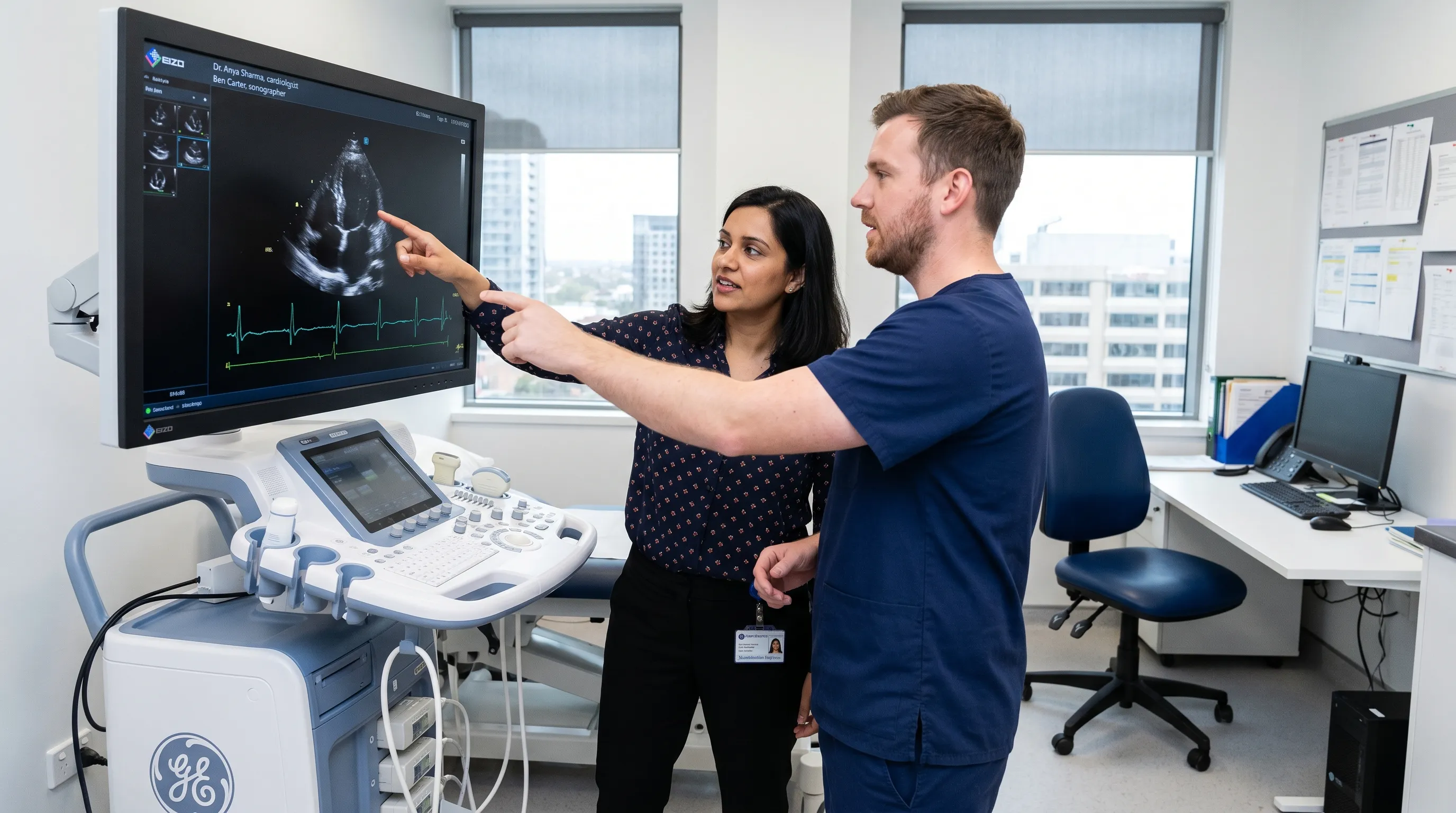
The examination room typically contains an ultrasound console, examination bed, and dedicated monitoring equipment. A registered cardiac sonographer applies conductive gel to the chest wall and systematically positions the transducer across multiple acoustic windows. You will hear rhythmic Doppler audio and observe sweeping image acquisitions on adjacent monitors. The sonographer may request breath-holding maneuvers, left lateral decubitus positioning, or brief coughing sequences to optimize chamber visualization. Image acquisition typically spans twenty to thirty minutes, followed by real-time sonographer review for technical adequacy. Interpreting physicians subsequently analyze acquired frames, perform quantitative measurements, and generate formal diagnostic reports transmitted directly to referring clinicians.
Transesophageal procedures necessitate topical pharyngeal anesthesia, intravenous sedation, and continuous cardiorespiratory monitoring. Patients must arrange transportation due to sedation effects and observe strict fasting guidelines for eight hours preceding the appointment. Stress echocardiograms involve baseline image acquisition followed by progressive exercise or pharmacologic infusion, with continuous electrocardiographic monitoring and symptom assessment throughout the stress protocol. Understanding procedural expectations reduces anxiety, improves cooperation during image acquisition, and enhances overall diagnostic accuracy.
Questions to Ask Before Booking
Proactive communication with scheduling coordinators and billing departments clarifies financial obligations and prevents unexpected charges. Inquire whether the quoted echo test price includes both technical facility fees and professional interpretation charges. Request explicit confirmation of in-network status for both the imaging facility and interpreting cardiologist. Ask whether prior authorization is required under your specific insurance plan and who assumes responsibility for securing pre-certification. Clarify payment expectations, accepted payment methods, prompt-pay discount availability, and financial assistance eligibility before confirming appointments. Document all verbal assurances in writing whenever possible to establish clear financial agreements prior to undergoing diagnostic procedures.
Verifying equipment calibration and facility accreditation status ensures technical excellence. Confirm that the center maintains Intersocietal Accreditation Commission certification and utilizes contemporary ultrasound platforms with advanced tissue harmonic imaging, strain analysis capabilities, and three-dimensional reconstruction functionality. High-resolution equipment improves diagnostic accuracy, reduces repeat study requirements, and ultimately delivers superior value for patients navigating cardiovascular evaluation pathways.
Frequently Asked Questions
How much does a standard echocardiogram typically cost?
The average cost for a standard transthoracic echocardiogram ranges from three hundred to two thousand five hundred dollars, depending heavily on facility type, geographic location, and insurance coverage. Independent imaging centers typically charge between three hundred and nine hundred dollars, while hospital outpatient departments frequently bill between one thousand two hundred and two thousand five hundred dollars. Negotiated insurance rates generally reduce these amounts by thirty to fifty percent, though patient responsibility depends entirely on individual plan deductibles, coinsurance percentages, and annual out-of-pocket maximums.
Does insurance cover the full echo test price?
Most commercial insurance plans, Medicare, and Medicaid cover medically necessary echocardiograms, but complete financial responsibility rarely falls to insurers. Patients typically encounter copayments ranging from twenty to seventy-five dollars, or coinsurance obligations representing ten to thirty percent of negotiated rates after deductible satisfaction. High-deductible health plans require patients to absorb the full contracted amount until annual thresholds are reached. Prior authorization compliance, network status verification, and accurate diagnostic coding significantly influence coverage approval and final patient costs.
Can I negotiate the price if I am uninsured?
Absolutely. Uninsured patients frequently secure substantial discounts by requesting self-pay fee schedules, prompt-payment reductions, or Medicare-based pricing benchmarks. Many facilities offer cash-pay rates forty to sixty percent below standard chargemaster figures for upfront settlement. Internal zero-percent payment plans, sliding-scale financial assistance programs, and community health clinic subsidies provide additional pathways to affordable care. Requesting a good faith estimate before scheduling establishes transparent pricing parameters and facilitates effective negotiation.
Are stress or transesophageal echocardiograms significantly more expensive?
Yes, advanced echocardiographic modalities command higher fees due to extended procedure times, specialized personnel requirements, medication administration, and additional monitoring protocols. Transesophageal studies typically range from fifteen hundred to three thousand dollars due to sedation administration, esophageal probe utilization, and extended recovery monitoring. Stress echocardiograms incorporating treadmill exercise or pharmacologic infusion frequently exceed two thousand dollars at hospital facilities. Contrast-enhanced studies add approximately one hundred to two hundred fifty dollars for microbubble contrast materials and specialized imaging sequences.
How do I verify if my provider charges a fair echo test price?
Utilize federal price transparency tools, commercial insurer cost estimator platforms, and independent healthcare pricing databases to compare regional benchmarks. Contact multiple local providers to request detailed good faith estimates, verify Intersocietal Accreditation Commission certification, and confirm in-network participation status. Cross-reference your explanation of benefits against CMS bundled payment guidelines to identify unauthorized charges or unbundling practices. Escalate billing discrepancies through provider compliance departments and insurer appeals processes to ensure financial accountability and equitable pricing alignment.
Conclusion
Navigating the financial landscape of cardiac diagnostics requires proactive research, transparent communication, and strategic financial planning. Understanding how facility fees, physician interpretation charges, insurance contracts, and geographic variations collectively determine your echo test price empowers you to secure high-quality cardiovascular care without unnecessary financial strain. By comparing costs across hospital and independent settings, leveraging federal transparency protections, negotiating cash discounts, and verifying network participation status, patients consistently achieve substantial savings while maintaining diagnostic excellence. Echocardiography remains an indispensable, non-invasive tool for evaluating cardiac structure, detecting valvular pathology, monitoring heart failure progression, and guiding life-saving treatment decisions. Prioritizing financial preparedness alongside clinical necessity ensures comprehensive wellness, eliminates billing surprises, and aligns diagnostic care with long-term economic stability. Consult your cardiologist, insurance representative, and healthcare financial counselor to develop a personalized care pathway that balances optimal diagnostic precision with sustainable financial responsibility.
How we work
Researched and drafted with AI assistance, then reviewed by a human editor against the cited sources.
This article is general health information, not medical advice. Consult a qualified healthcare professional about your own situation.