Colace vs Miralax: Which Laxative Is Right for You?

Navigating the crowded pharmacy aisle for constipation relief can feel overwhelming, especially when popular over-the-counter options seem to promise identical results. The debate surrounding colace vs miralax is one of the most common questions healthcare professionals encounter in primary care clinics and gastroenterology practices. Both medications target bowel irregularity, yet they operate through entirely different physiological pathways, carry distinct safety profiles, and serve unique clinical purposes. Understanding these differences is essential not only for achieving immediate relief but also for maintaining long-term digestive wellness without risking medication dependency or gastrointestinal discomfort. When evaluating colace vs miralax, patients must consider their specific symptoms, medical history, hydration status, and how quickly they require relief. Evidence-based medicine strongly supports a tailored approach to laxative therapy, emphasizing that no single product works universally for every individual. By examining the pharmacology, clinical efficacy, and practical application of each formulation, readers can make informed decisions that align with current gastroenterology guidelines and prioritize gut health. This comprehensive guide explores every angle of colace vs miralax, providing medically accurate information, actionable lifestyle strategies, and clear clinical comparisons to help you optimize your digestive routine safely.
Understanding the Fundamentals of Bowel Health and Laxative Therapy
The Pathophysiology of Constipation
Constipation is far more than a temporary inconvenience; it is a complex gastrointestinal condition characterized by infrequent bowel movements, hard stools, straining, and often incomplete evacuation. The American College of Gastroenterology defines functional constipation based on symptom frequency and duration, typically requiring at least three months of persistent discomfort. At a physiological level, constipation occurs when colonic transit slows excessively, allowing prolonged water absorption from the fecal mass. The large intestine naturally reclaims fluids to maintain systemic hydration, but when transit time extends beyond optimal limits, stools become desiccated, compacted, and difficult to pass. Contributing factors span dietary deficiencies, sedentary lifestyles, medication side effects, neurological conditions, pelvic floor dysfunction, and chronic stress. Recognizing these underlying triggers is crucial because laxative therapy should complement, rather than replace, foundational lifestyle modifications. When patients evaluate colace vs miralax, they are essentially deciding which mechanism best addresses their specific transit delay and stool consistency abnormalities.
Free calculatorHigh-Fiber Foods ChartChart of high-fiber foods for digestive healthOpen the calculatorHow Over-the-Counter Laxatives Restore Motility
Over-the-counter laxatives are categorized by their mechanism of action, each targeting a different segment of the digestive cascade. Bulk-forming agents increase stool mass and stimulate peristalsis through fiber absorption. Stimulant laxatives trigger intestinal muscle contractions by irritating the mucosal lining or directly activating neural pathways. Stool softeners lower surface tension, allowing water and lipids to penetrate hard feces more easily. Osmotic agents, meanwhile, draw electrolytes and water into the intestinal lumen, creating a softer, more voluminous stool that moves naturally. The choice between these categories directly influences onset of action, side effect profile, and suitability for chronic management. When comparing colace vs miralax, it becomes evident that one belongs to the surfactant stool softener category while the other operates as an osmotic laxative. This fundamental distinction explains why clinical guidelines often favor one over the other depending on whether the primary issue is stool hardness, transit speed, or chronic dysmotility. Understanding these pharmacological differences empowers patients to avoid trial-and-error cycles that can worsen bloating, dehydration, or medication overuse.
Colace (Docusate Sodium): The Classic Stool Softener
Pharmacological Mechanism of Action
Colace, generically known as docusate sodium, belongs to a class of medications classified as anionic surfactants. When ingested, docusate sodium travels through the upper gastrointestinal tract without undergoing significant metabolism or systemic absorption. Its primary function occurs in the colon, where it reduces the surface tension between the aqueous and lipid phases of the stool. By doing so, it facilitates the emulsification and penetration of intestinal water and fats into hardened fecal matter, gradually softening the consistency. Unlike osmotic or stimulant agents, docusate sodium does not increase colonic water volume or force intestinal contractions. Instead, it relies on the body’s existing motility patterns to naturally advance the softened stool toward the rectum. This gentle, non-stimulating approach makes it particularly appealing for patients who cannot tolerate cramping or who require minimal systemic activity. However, because it does not actively draw fluid into the bowel, its effectiveness is highly dependent on adequate baseline hydration and dietary fiber intake. When examining colace vs miralax, the slower, surfactant-driven mechanism of docusate sodium positions it as a supportive therapy rather than an acute intervention.
Clinical Indications and Optimal Use Cases
Clinical guidelines traditionally reserve Colace for patients who must avoid straining during bowel movements, such as postoperative individuals, postpartum mothers, cardiac patients with hypertension or recent myocardial infarction, and those recovering from pelvic or rectal surgeries. In these scenarios, the primary goal is not necessarily rapid bowel clearance but rather minimizing intra-abdominal pressure and reducing discomfort during evacuation. Colace is also frequently prescribed alongside opioid analgesics to counteract medication-induced constipation, although evidence suggests that its efficacy alone may be insufficient for severe opioid-related dysmotility. Many patients wonder about colace vs miralax when facing occasional hard stools without significant transit delay. For those whose primary complaint is stool hardness rather than infrequency, a stool softener may provide adequate relief with minimal side effects. It is important to note, however, that systematic reviews have shown mixed results regarding docusate sodium’s standalone efficacy, leading some clinicians to prefer osmotic alternatives for more predictable outcomes. Nevertheless, Colace remains widely utilized due to its favorable safety profile, over-the-counter accessibility, and minimal interaction potential with other medications.
Dosing Protocols and Administration Tips
Adult dosing for Colace typically ranges from fifty to five hundred milligrams daily, divided into one to four doses depending on severity and individual response. The medication is available in capsules, liquid concentrates, and chewable tablets, allowing flexibility for patients with dysphagia or specific formulation preferences. To maximize effectiveness, docusate sodium should be taken with a full eight-ounce glass of water. Hydration is non-negotiable, as the surfactant mechanism relies on adequate fluid availability to soften stool effectively. Patients often notice improvements within twelve to seventy-two hours, though consistent daily use for three to five days usually yields the most reliable results. It is advisable to take Colace at the same time each day to establish routine colonic signaling. If no bowel movement occurs after one week of appropriate dosing and adequate hydration, discontinuation and medical evaluation are recommended. When weighing colace vs miralax, patients should consider whether their dosing schedule and lifestyle can accommodate the slower onset and hydration-dependent nature of docusate sodium.
Miralax (Polyethylene Glycol 3350): The Modern Osmotic Laxative
How Osmotic Agents Draw Water into the Intestines
Miralax contains polyethylene glycol 3350 (PEG 3350), a high-molecular-weight polymer that functions as an osmotic laxative. Upon reaching the colon, PEG 3350 molecules remain largely unabsorbed and do not undergo significant fermentation by gut microbiota. Their primary physiological action is to create an osmotic gradient that retains free water within the intestinal lumen. This increased fluid volume softens fecal matter, expands stool bulk, and gently stretches the colonic wall, which naturally stimulates peristaltic contractions without chemical irritation or neural stimulation. The result is a more predictable, comfortable bowel movement that closely mimics normal digestive physiology. Unlike stimulant laxatives, which can cause dependency or electrolyte depletion with prolonged use, PEG 3350 maintains electrolyte balance and does not induce mucosal inflammation. This safety profile has elevated Miralax to a first-line recommendation in numerous clinical guidelines for both acute and chronic constipation. When patients explore colace vs miralax, the osmotic mechanism of polyethylene glycol consistently demonstrates superior efficacy in hard stool resolution and transit time normalization.
Evidence-Based Efficacy and Recommended Patient Profiles
Extensive randomized controlled trials and meta-analyses have established polyethylene glycol 3350 as one of the most effective over-the-counter constipation treatments available. Studies consistently show higher complete bowel movement rates, improved stool consistency scores, and reduced straining compared to placebo and other OTC agents. Clinical guidelines from gastroenterology societies endorse Miralax for adults, adolescents, and carefully selected pediatric populations experiencing functional constipation, irritable bowel syndrome with constipation, and medication-induced bowel irregularity. It is particularly beneficial for individuals who experience prolonged colonic transit, chronic hard stools, or inadequate response to dietary modifications alone. Many healthcare providers choose Miralax as an initial therapy because it addresses both stool consistency and transit speed simultaneously. When comparing colace vs miralax, the robust clinical data supporting polyethylene glycol explains why it has largely replaced stool softeners in modern therapeutic algorithms for routine constipation management. Patients with inflammatory bowel disease, unexplained weight loss, or rectal bleeding should seek medical evaluation before initiating any laxative regimen to rule out serious underlying pathology.
Proper Hydration and Dosing Guidelines for Safety
The standard adult dose of Miralax is seventeen grams, typically measured as one heaping scoop or single-use packet, dissolved completely in four to eight ounces of clear liquid such as water, juice, coffee, or tea. Patients should consume the mixture immediately after dissolution and follow it with additional water throughout the day. Because PEG 3350 draws fluid into the intestines, inadequate hydration can paradoxically worsen dehydration, cause cramping, or delay therapeutic effects. Onset typically ranges from twelve to forty-eight hours, with peak effectiveness often observed after consistent daily use for several days. Miralax may be used safely for up to seven days without medical consultation, though chronic constipation often requires longer-term management under provider supervision. Dosage adjustments may be necessary for elderly patients or those with renal impairment, though PEG 3350’s lack of systemic absorption minimizes kidney-related risks. When evaluating colace vs miralax, individuals must assess their ability to maintain consistent hydration and adhere to daily dosing schedules, as both factors directly influence therapeutic success and gastrointestinal comfort.
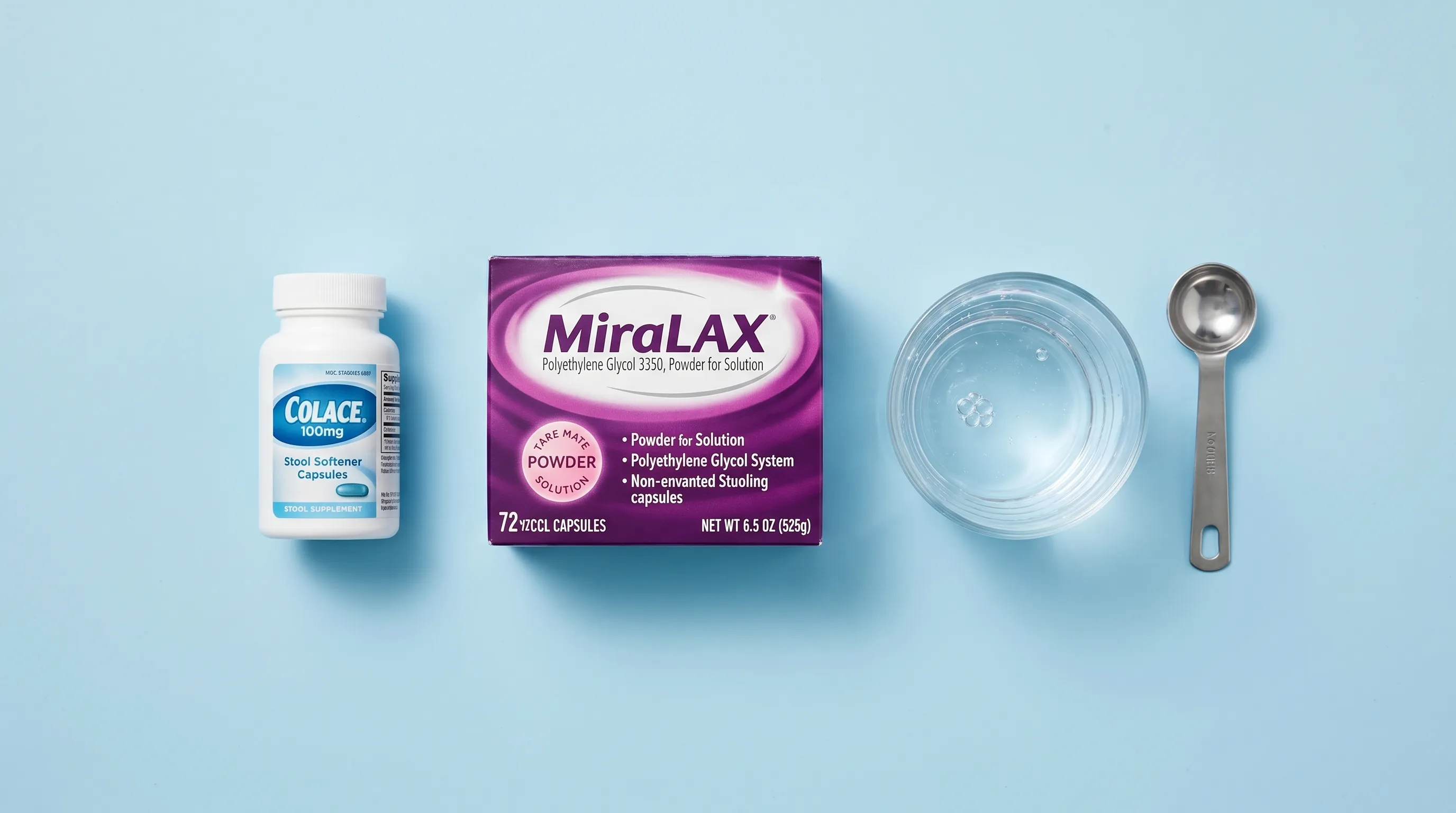
Colace vs Miralax: A Comprehensive Head-to-Head Analysis
Onset of Action and Clinical Effectiveness
Speed of relief and predictability are critical factors when selecting a laxative. Clinical evidence consistently demonstrates that osmotic agents like Miralax produce more rapid and reliable bowel movements than stool softeners like Colace. Polyethylene glycol 3350 typically initiates therapeutic action within twelve to twenty-four hours, with most patients experiencing complete relief within forty-eight hours. Docusate sodium, by contrast, operates on a delayed timeline, often requiring two to three days before noticeable stool softening occurs. This discrepancy stems from their distinct mechanisms: osmotic agents actively alter colonic fluid dynamics, while surfactants passively facilitate water penetration into already-formed stool. For patients seeking immediate relief before travel, medical procedures, or severe discomfort, Miralax generally outperforms Colace. When weighing colace vs miralax, the faster onset of PEG 3350 makes it preferable for acute episodes, whereas docusate sodium may suffice for patients prioritizing gradual, non-stimulating softening over rapid evacuation. Clinical trials further reveal that PEG 3350 achieves higher rates of normalized stool consistency and reduced straining, reinforcing its position as a more effective standalone agent.
Side Effect Profiles and Gastrointestinal Tolerance
Both medications are generally well-tolerated, but their side effect profiles differ based on pharmacological activity. Colace’s most common adverse effects include mild throat irritation, stomach cramps, or diarrhea, particularly when combined with inadequate hydration or excessive dosing. Because it does not stimulate intestinal nerves or alter electrolyte balance significantly, systemic side effects are rare. Miralax typically causes bloating, gas, nausea, or loose stools, especially during initial use or if fluid intake is insufficient. The osmotic mechanism can occasionally lead to mild abdominal discomfort as the colon adapts to increased fluid volume. However, clinical studies confirm that PEG 3350 causes fewer severe cramps and electrolyte disturbances compared to stimulant laxatives. Patients comparing colace vs miralax should consider their sensitivity to bloating and cramping. Those with highly sensitive digestive systems may tolerate Colace better, while patients who prioritize predictable relief and are willing to manage initial mild gas often prefer Miralax. Proper dosing and hydration dramatically reduce adverse effects for both products, making adherence to label instructions essential.
Cost, Formulations, and Accessibility Considerations
Accessibility and affordability heavily influence patient adherence and treatment sustainability. Both Colace and Miralax are widely available over-the-counter in the United States, Canada, and numerous international markets without requiring a prescription. Colace is typically priced higher per dose than generic docusate sodium, though both remain budget-friendly for short-term use. Miralax is available as a brand-name powder, generic polyethylene glycol 3350, and pre-measured single-use packets, offering flexibility for travel or precise dosing. Generic PEG 3350 is significantly more cost-effective than the brand name, making long-term management financially sustainable. Insurance coverage rarely applies to over-the-counter laxatives, but many pharmacy discount programs and health savings accounts offset expenses. When analyzing colace vs miralax, cost differences are minimal, but the broader availability of Miralax in multiple formats and lower-priced generic equivalents gives it a slight edge for chronic users. Pharmacists and healthcare providers frequently recommend generic polyethylene glycol for patients requiring daily therapy due to its proven efficacy, affordability, and consistent manufacturing standards.
Comparison Table: Colace vs Miralax
| Feature | Colace (Docusate Sodium) | Miralax (Polyethylene Glycol 3350) |
|---|---|---|
| Mechanism of Action | Surfactant stool softener | Osmotic laxative |
| Typical Onset | 12–72 hours | 12–48 hours |
| Primary Use | Prevent straining, soften hard stools | Treat acute/chronic constipation, normalize transit |
| Hydration Dependency | High (requires adequate fluid) | Moderate to High (supports osmotic draw) |
| Cramping/Bloating | Minimal | Mild to Moderate (initial use) |
| Long-Term Safety | Generally safe, limited efficacy data | Extensively studied, guideline-recommended |
| Best For | Post-surgical, postpartum, opioid users | Functional constipation, chronic dysmotility |
| Daily Dose Range | 50–500 mg | 17 g (one scoop/packet) |
When reviewing the data above, patients can clearly see how colace vs miralax align with different clinical scenarios. The table reinforces that neither medication is universally superior; rather, each serves a distinct therapeutic niche based on symptom presentation and treatment goals.
Special Populations and Critical Safety Considerations
Pediatric Use: Safety, Dosing, and Age-Appropriate Choices
Constipation in children requires careful evaluation due to developmental differences in bowel physiology and medication metabolism. Pediatric gastroenterologists frequently recommend polyethylene glycol as the first-line treatment for functional childhood constipation because of its safety profile, taste-neutral formulations, and predictable efficacy. Dosing is typically weight-based, starting at 0.2 to 0.8 grams per kilogram daily, with gradual adjustments to achieve soft, painless bowel movements. Colace is sometimes used in infants and toddlers, though clinical evidence supporting its standalone effectiveness in pediatric populations is limited. Parents comparing colace vs miralax for children should prioritize evidence-based guidelines and pediatrician recommendations rather than relying solely on adult OTC experiences. Establishing consistent bathroom routines, addressing dietary fiber deficits, and limiting processed foods remain foundational strategies alongside pharmacological support. Any child experiencing bloody stools, severe abdominal pain, vomiting, or failure to thrive requires immediate medical assessment to rule out anatomical abnormalities, Hirschsprung disease, or metabolic disorders.
Pregnancy, Postpartum, and Lactation Safety Data
Bowel irregularity affects a significant percentage of pregnant and postpartum individuals due to hormonal fluctuations, uterine pressure, iron supplementation, and reduced physical activity. Both docusate sodium and polyethylene glycol are widely considered acceptable during pregnancy, though classification systems vary. Docusate sodium exhibits minimal systemic absorption, making it a traditional first choice for obstetricians managing mild stool hardness. Polyethylene glycol demonstrates an equally favorable safety profile, with no teratogenic effects identified in extensive clinical studies and pregnancy registries. Lactating individuals can safely use either medication, as neither concentrates significantly in breast milk. When evaluating colace vs miralax during pregnancy, patients should consult their obstetric care provider to align laxative selection with prenatal vitamin regimens, gestational health markers, and personal tolerance. Postpartum individuals often benefit from Miralax due to its ability to counteract epidural aftereffects, iron-induced constipation, and perineal discomfort. Consistent hydration, gentle pelvic floor exercises, and gradual fiber reintroduction complement pharmacological therapy during this recovery phase.
Geriatric Patients and Polypharmacy Interactions
Older adults face elevated constipation risk due to age-related colonic dysmotility, reduced mobility, inadequate fluid intake, and concurrent medication use. Polypharmacy complicates laxative selection, as interactions with antihypertensives, diuretics, antidepressants, and calcium supplements can alter gastrointestinal transit and electrolyte balance. Polyethylene glycol remains the preferred agent in geriatric care because it maintains electrolyte equilibrium, causes minimal cramping, and does not interfere significantly with systemic drug metabolism. Docusate sodium may be utilized alongside other therapies but rarely provides standalone relief for age-related slow transit. When comparing colace vs miralax for elderly patients, clinicians emphasize the osmotic reliability and safety of PEG 3350 while cautioning against laxative dependency from stimulant products. Regular renal function monitoring, careful hydration management, and coordinated care with pharmacists prevent complications such as dehydration, orthostatic hypotension, or electrolyte derangements. Fall prevention strategies often improve when bowel regularity is optimized, highlighting the interconnected nature of gastrointestinal and musculoskeletal health in older populations.

Evidence-Based Lifestyle and Dietary Integration
Optimizing Fiber Intake for Natural Bowel Regularity
No laxative, regardless of formulation, can fully compensate for chronic dietary fiber deficiency. Soluble and insoluble fibers work synergistically to regulate colonic transit, support beneficial gut microbiota, and maintain optimal stool consistency. Adults should aim for twenty-five to thirty-eight grams of dietary fiber daily, sourced from whole grains, legumes, vegetables, fruits, nuts, and seeds. Incremental increases prevent bloating and gas, while consistent consumption establishes predictable bowel patterns. Patients frequently compare colace vs miralax without addressing their baseline dietary intake, which often diminishes long-term success. Introducing psyllium husk, ground flaxseed, or oat bran alongside adequate water provides natural bulk-forming support. Registered dietitians emphasize pairing fiber with healthy fats like olive oil and avocado to lubricate intestinal contents naturally. Tracking symptom response and adjusting fiber sources based on individual tolerance ensures sustainable digestive optimization without reliance on pharmacological intervention.
Strategic Hydration and Physical Activity Protocols
Water acts as the essential medium for both stool softening and osmotic laxative efficacy. Inadequate hydration renders docusate sodium largely ineffective and can cause polyethylene glycol to draw fluid from tissues, worsening dehydration. Adults should consume half their body weight in ounces of water daily, increasing intake during heat, exercise, or laxative therapy. Spreading fluid consumption evenly throughout the day prevents urinary frequency and maintains steady colonic hydration. Physical activity stimulates enteric nervous system signaling and abdominal muscle engagement, accelerating transit time. Even twenty to thirty minutes of daily walking, yoga, or light resistance training significantly improves bowel regularity. When evaluating colace vs miralax, individuals must recognize that hydration and movement form the foundation upon which these medications build their therapeutic effects. Sedentary lifestyles and chronic fluid restriction consistently undermine OTC laxative efficacy, regardless of formulation choice.
Establishing Sustainable Bowel Training Habits
Gut-brain axis communication relies heavily on routine and environmental cues. Bowel training involves attempting evacuation at consistent times daily, ideally fifteen to thirty minutes after meals when the gastrocolic reflex naturally increases colonic activity. Using a footstool to elevate the knees aligns the anorectal angle, reducing straining and improving evacuation efficiency. Patients comparing colace vs miralax often overlook behavioral strategies that enhance medication effectiveness. Stress reduction techniques, mindful eating, and avoiding delayed bathroom urges strengthen enteric signaling and prevent functional outlet obstruction. Digital detoxification during bathroom visits prevents distraction-induced pelvic floor dyssynergy. Clinical evidence supports combining scheduled toilet time, dietary optimization, and targeted laxative therapy for comprehensive constipation resolution. Long-term success depends on transitioning from symptom suppression to physiological restoration through consistent, evidence-based habits.
Frequently Asked Questions
Can I take Colace and Miralax together safely?
While Colace and Miralax work through different mechanisms, combining them should only be done under medical supervision. Taking both simultaneously can lead to excessive fluid shifts, electrolyte imbalances, or overly loose stools. Many healthcare providers recommend starting with one agent, assessing tolerance and effectiveness for three to five days, and only considering combination therapy if explicitly advised for severe or refractory constipation.
How quickly does Miralax work compared to Colace?
Miralax typically produces a bowel movement within twelve to forty-eight hours due to its direct osmotic effect on intestinal water retention. Colace, functioning as a surfactant stool softener, generally takes longer, ranging from twelve to seventy-two hours, and is often considered less reliable for acute relief. Clinical guidelines consistently show that osmotic agents like Miralax provide faster and more predictable results for most adults.
Is Miralax safe for long-term daily use?
Polyethylene glycol 3350 is widely recognized as one of the safest and most effective long-term treatments for chronic constipation. Extensive clinical trials and gastroenterology guidelines confirm that daily use for several months does not lead to dependency, tolerance, or significant electrolyte depletion when used at recommended doses. However, persistent symptoms beyond two weeks should always prompt a medical evaluation to rule out underlying gastrointestinal pathology.
Can pregnant individuals use Colace or Miralax?
Both docusate sodium and polyethylene glycol are commonly considered acceptable during pregnancy, but they are classified differently by regulatory bodies. Colace is frequently recommended as a first-line stool softener due to minimal systemic absorption, while Miralax is also widely prescribed and supported by substantial clinical safety data. Pregnant individuals should always consult their obstetrician before initiating any over-the-counter laxative to ensure proper dosing and rule out contraindications.
Why did my doctor recommend Miralax instead of a stimulant laxative?
Gastroenterologists typically prefer osmotic laxatives like Miralax over stimulant options because osmotics draw water naturally into the colon without forcing intestinal contractions. Stimulant laxatives can cause cramping, discomfort, and potential bowel dependency if overused. Miralax provides gentle, predictable relief and maintains normal electrolyte balance when paired with adequate hydration, making it the preferred choice for both acute episodes and chronic management according to current clinical practice guidelines.
Conclusion
Choosing the right over-the-counter laxative requires understanding the physiological differences, clinical evidence, and practical applications of each formulation. The discussion surrounding colace vs miralax ultimately centers on matching medication mechanisms to individual symptom profiles, hydration capacity, and long-term digestive goals. Miralax demonstrates superior efficacy, faster onset, and stronger clinical backing for most adults dealing with functional constipation, chronic transit delay, or medication-induced bowel irregularity. Colace retains a valuable niche for patients who must minimize straining, tolerate osmotic agents poorly, or require gentle stool softening alongside other therapies. Neither product replaces foundational lifestyle interventions, including dietary fiber optimization, strategic hydration, physical activity, and consistent bowel training. Patients experiencing persistent symptoms, rectal bleeding, unexplained weight loss, or severe abdominal pain must seek professional medical evaluation to exclude serious underlying conditions. By integrating evidence-based pharmacological options with sustainable daily habits, individuals can restore natural bowel regularity, enhance gastrointestinal comfort, and maintain overall digestive wellness without relying on long-term medication dependency. Always consult a healthcare provider or pharmacist when initiating, combining, or transitioning between laxative therapies to ensure safety, efficacy, and alignment with your comprehensive health profile.
For further reading on constipation management and OTC medication safety, visit Mayo Clinic’s Constipation Guide and explore the FDA’s OTC Laxative Regulations. Clinical guidelines are regularly updated by professional organizations like the American College of Gastroenterology, and detailed drug information can be found through MedlinePlus and MedlinePlus PEG 3350 Resource.
How we work
Researched and drafted with AI assistance, then reviewed by a human editor against the cited sources.
This article is general health information, not medical advice. Consult a qualified healthcare professional about your own situation.